










































Every week, there’s a new demo in your inbox promising to fix growth you didn’t know was broken. An AI writing assistant, a predictive scoring layer, even an agentic workflow tool that’ll supposedly run your funnel while you sleep. Most marketing teams say yes to too many of them. They have the relationship backward.
Tools should be a downstream decision, not an upstream one.
- Strategy defines the problem.
- The audit identifies the gap.
- Only then does a tool earn a place in the martech stack.
Too many teams reverse that order, buying capabilities and shiny tools first, then trying to build a strategy around them. The result is more noise — more inputs, dashboards, and places for the story to fragment — with less clarity about what’s actually working.
A team hits a growth plateau and asks, “What tool do we need to fix it?” The starting point should be defining what it’s trying to accomplish and what’s getting in the way. A tool purchase only becomes meaningful once the actual problem is clear.
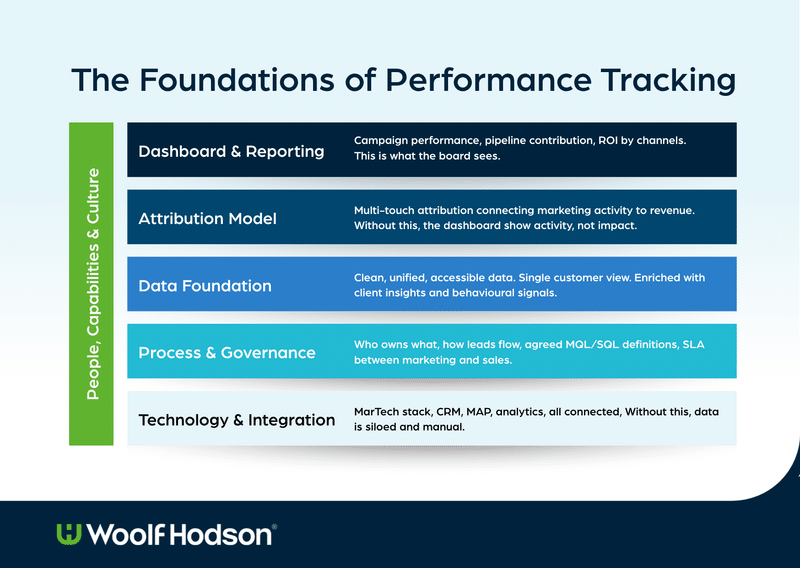
Without that, every new tool adds another interpretation of the same data. Three overlapping analytics platforms don’t triangulate the truth. They create more conflicting versions of the story, and teams eventually gravitate toward the one that supports what they already believe.
Every additional system also creates another place for data to drift, another dataset that doesn’t reconcile with the last one, and another dashboard someone has to reconcile manually before a leadership meeting. Adding tools without a strategy can weaken the signal you already have.
Strategy prevents that by determining which signals matter and which tools belong in the stack.
10X your SEO with Semrush for Enterprise.
The world’s most powerful SEO platform, purpose-built for Enterprise.
Request demo
The audit exists to serve the strategy
Audits are critical. They show you what’s cluttered and where the gaps are. Your strategy gives those findings direction. The audit shouldn’t determine what you buy.
Run the audit as a strengths, weaknesses, opportunities, and threats (SWOT) analysis against your strategy’s requirements, rather than as a general housekeeping exercise.
Strengths
Which tools are actually load-bearing for the strategy you’ve defined? Clean data, consistent adoption, and real integration matter more than how impressive the platform looks in a demo. Keep the systems that work, even when they’re not exciting.
Weaknesses
Where does the current stack fail to answer the questions your strategy is asking? Workarounds are usually the tell — the spreadsheet someone maintains because the dashboard can’t be trusted, or the manual export nobody has gotten around to automating. Every workaround is a question the stack can’t answer.
Opportunities
Where does the strategy require a capability you genuinely don’t have?This is where a tool purchase makes sense. Notice the order: the strategy identifies the need, then the tool search follows.
Threats
What happens to clarity as more systems are added? Every new tool creates another place for ownership to blur and for data to contradict itself. Complexity compounds unless something above the stack is actively deciding what’s allowed in.
AI makes the ordering mistake more expensive
Traditional martech additions were mostly passive. You bought an email platform, CRM module, or analytics tool, and it sat there until someone used it. AI is different. AI tools score leads, generate copy, route inquiries, adjust bids, streamline workflows, and increasingly make decisions with limited human intervention or governance.
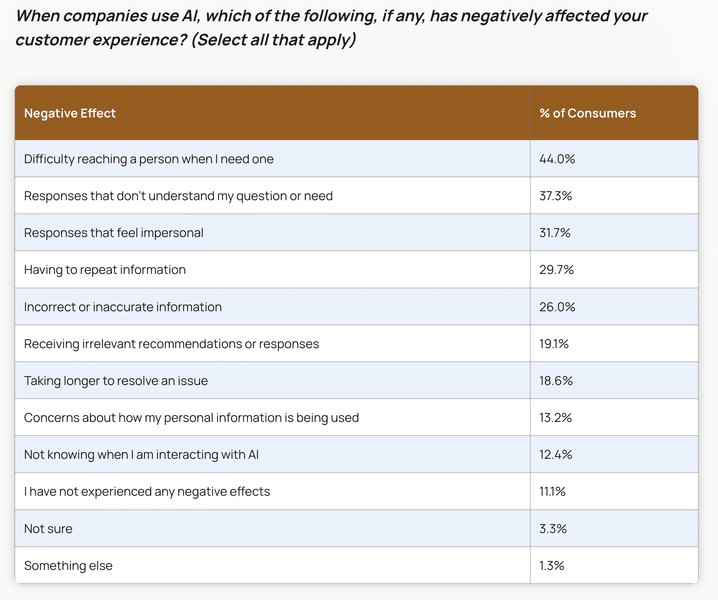
AI adds a voice that moves quickly, confidently, and can be very wrong. A lead-scoring model without a strategic definition of a good lead won’t clarify anything. It’ll generate a number, attach confidence to it, and potentially automate decisions based on a flawed premise.
Likewise, a generative content tool without a positioning strategy won’t create differentiated messaging. It’ll produce polished copy that says little that’s distinct because there’s no strategic point of view behind it.
The problem is turning it loose before the strategy defines what it’s supposed to protect or produce. AI doesn’t fix strategic ambiguity. It executes it faster, with enough polish to make flawed output look credible until the pipeline numbers say otherwise.
Your strategy should define the business problem in specific terms before any tool gets consideration. Determine what capability you need, how you’ll measure it, and whether a tool belongs in the stack.
Not “We need an AI content tool.” Instead, “Our sales cycle stalls during technical evaluation because we don’t have a scalable way to produce comparison content for each persona or ICP.”
Not “We should add predictive lead scoring.” Instead, “Sales and marketing disagree on which leads matter, and that disagreement is slowing pipeline velocity.”
I’d also resist the AI-first framing many vendors push. The questions that matter are:
- Is this actually constraining growth right now?
- Is the underlying data clean enough to support it?
- Is the team mature enough and trained to act on what it produces without adding another dashboard to the pile?
Those are strategy questions, not technology questions.
Disciplined teams audit against strategic requirements on a set cadence, retire tools that no longer serve a business need, and require a defined problem, clear owner, and measurable success metric before approving a purchase. They also set a reevaluation date upfront.
If a tool can’t be tied back to the strategy after a defined period, it’s noise, no matter how good the demo was. Teams that add tools without a strategy create next year’s problem while sorting through dashboards they never needed.
Strategy comes first. Let it tell you what to buy, not the other way around.