















































Looking for what to see in theaters? Our feature, updated weekly, highlights our top recommendations for films currently in theaters, from new releases to restorations receiving a proper theatrical run.
While we already provide extensive monthly new-release recommendations and weekly streaming recommendations, as distributors’ roll-outs can vary, this is a one-stop list to share the essential films that may be on a screen near you.
La Bola Negra (Los Javis)

If 19th- and 20th-century storytelling was defined by grandiose literature, the 21st is all about cinema. We read less and watch more; consequently, films have become a substitute for sweeping stories that weave various timelines and protagonists. The latest in such regard is Cannes revelationLa Bola Negra(akaThe Black Ball), a truly ambitious project—inspired by historical truth while remaining a fictional, highly personal undertaking. – Jan T. (full review)
Fatherland (Paweł Pawlikowski)
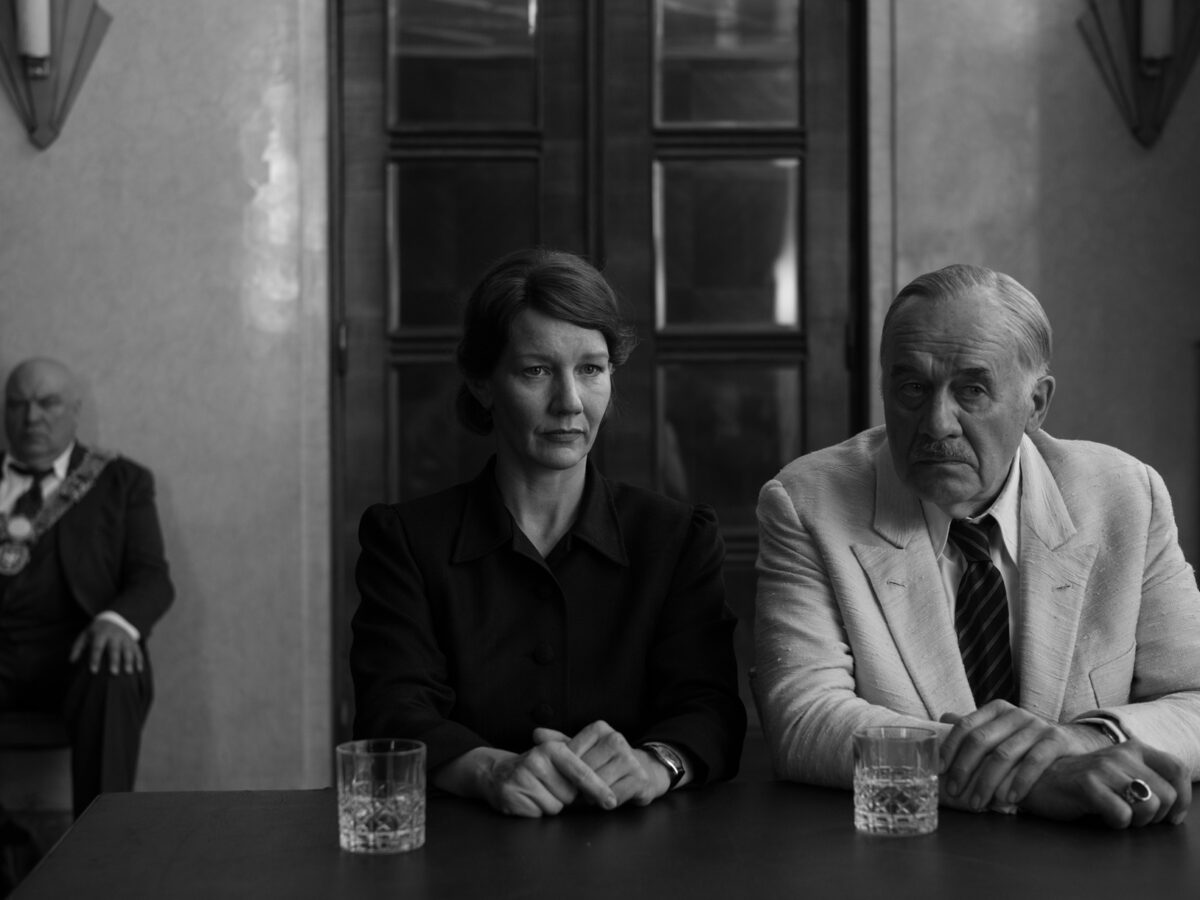
Thomas Mann, Nobel Prize-winning writer and voice of the German resistance from abroad, fled Germany in 1933 to take refuge in California, where he lived for sixteen years before returning to Germany in 1949 to receive the Goethe Prize in Frankfurt, show face, and embrace the flattery of his snowballing celebrity. That’s where we enter Polish writer-director (and for the first time, editor) Paweł Pawlikowski’sFatherland, a film that traces Mann’s (Hanns Zischler) widely publicized but brief return to his homeland under the guidance of his brilliant, staid daughter and translator Erika (Sandra Hüller). – Luke H. (full review)
Fjord (Cristian Mungiu)

As with R.M.N., Mungiu is in top-shelf operation. Fjord is a triumphant film that tugs at the spiritual and soulful in all of us, regardless of nation, creed, faith, or the rejection of all three. What the court will rule in both cases, and whether or not the Gheorghius will get back their kids, pulses with a pregnant tension as the nearly two-and-a-half-hour film proceeds in what seems 30 minutes. And its end will have you falling off the edge of your seat. – Luke H. (full review)
Gentle Monster (Marie Kreutzer)
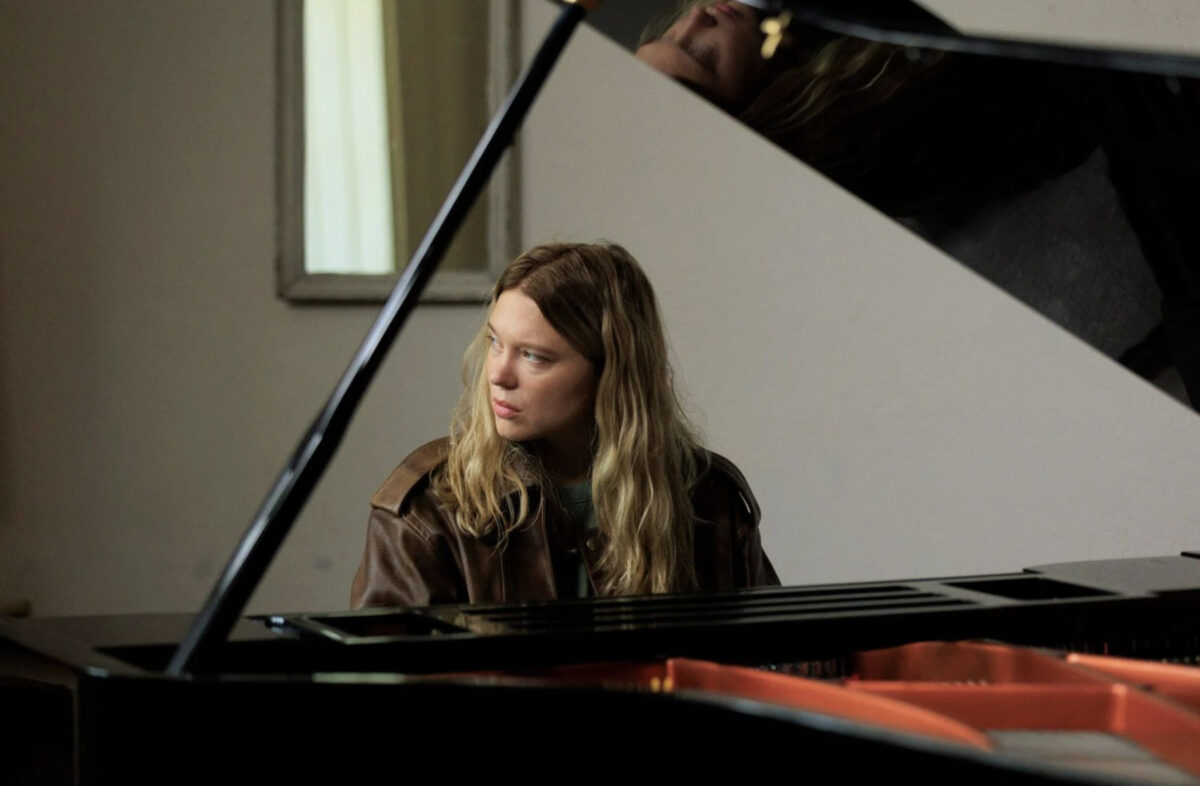
“Look into my eyes / can you see they’re open wide / would I lie to you?” Those lyrics linger in the air as a soft whisper for only a moment before the accompanying piano notes carry them away and into the beginning of Gentle Monster, the latest from Corsage director Marie Kreutzer. One might already suspect that the cover of such an emblematic ’90s pop song, pulsating under the fingertips of the film’s protagonist, Lucy (Léa Seydoux), could serve as exposition in some way. Yet the growl camouflaged in Seydoux’s silky voice might just as well be a sign of fatigue—the Lucy we meet in this opening scene is still adapting to quiet, countryside life from a career of touring European capitals. When her husband Philip (Laurence Rupp) interrupts her practice by rushing in, full-on panic attack, it’s the patience in her consoling voice that signals it’s not the first time she has stopped mid-song to make room for him. – Savina P. (full review)
The History of Concrete (John Wilson)

Like a movie tie-in, John Wilson’s debut documentary feature,The History of Concrete, picks up immediately where his HBO seriesHow To with John Wilsonleft off after three seasons. An elevated public profile does not lead to the next bigger, better project. Instead it’s illustrated via Wilson stumbling upon an empty bag of weed featuring an unauthorized branding of his likeness. The full-sized crew afforded by his show now absent, Wilson is forced back to his roots, filming the day-to-day scenes of New York City life solo. – Caleb H. (full review)
If They Go Will They Miss Me (Walter Thompson-Hernández)

Finding poetic beauty in the quotidian, Walter Thompson-Hernández’sIf I Go Will They Miss Mecenters on coming of age in housing projects of southern Los Angeles. It’s a way of life often depicted with a grittiness that favors do-or-die intensity, yet this emerging director of great promise takes an opposite approach. One where dreams of flight are always on the mind as the planes coming in and out of nearby LAX are constantly passing above. Greek gods, as studied in school, give purpose to a higher calling. An affection and adoration for and from its ensemble (many non-professionals, in this case) form a portrait of a living, loving community that rises above hardship. Just as his characters draw grand personal inspiration, Thompson-Hernández is greatly indebted to a variety of renowned directors, including Barry Jenkins, RaMell Ross, Charles Burnett, and Spike Lee, with the end result a film greater than the sum of its recognizable influences. – Jordan R. (full review)
Making Marie Antoinette (Eleanor Coppola)

Wrapped inside the visual splendor, luxurious elegance, and ornate decoration of Sofia Coppola’s resplendent and anachronistic Marie Antoinette is the story of a young woman leaving her family behind to help lead another country—an unknown journey and simultaneous document of wealth, excess, and its depressive isolation. Yet despite Coppola tapping into her short filmography’s recurring themes, at least on set, she never contended with the same separation and loneliness of her ill-fated heroine. That’s largely because her mother, Eleanor Coppola, was always by her side—lurking and observing and recording 80 hours of behind-the-scenes footage with her digital camera inside the halls of Versailles.– Jake K-S. (full review)
My Undesirable Friends: Part II – Exile (Julia Loktev)

With My Undesirable Friends: Part I – Last Air in Moscow winning the 2025 Indie Film Site Network Advocate Award, the most-anticipated sequel of the year may be Julia Loktev’s My Undesirable Friends: Part II – Exile, which expands its scope by tracking the journalists who were forced out of Russia and now continue their work across the globe. As Savina Petkova said in our Critic’s Pick review out of Venice, “As Julia Loktev follows her protagonists in exile to Turkey, Georgia, Latvia, the Czech Republic, Poland, and the United States, what in any other film could be a chronicle of homes and places becomes a cartography of grief and displacement. Exile tastes as bitter as the collective responsibility of its protagonists, whose acute sense of accountability (‘we let this happen’ are words uttered by several people) clashes with the ambivalence of being Russian today. Still, the strength of their convictions is the driving force behind My Undesirable Friends, the urge to never forget that history is made here and now.”
NAZA (Yuval Abraham and Rachel Szor)

In a sobering wake-up call to anyone somehow not paying attention to the genocide Israel is enacting, as well as the most essential documentary of the year, No Other Land directors Yuval AbrahamandRachel Szor have returned with NAZA. Luke Hicks said in his review, “Very, very few films, no matter how great or important, are actually urgent. You’ll get around to it eventually; it’ll be stuck in time waiting for you. But NAZA is urgent, an essential film, a living document in conversation with the most pressing issue in the world right now. And it’s the new foremost authority on what’s happening on a granular, behind-the-scenes level in Israel’s crusade against Gaza. It’s much harder to question or deny a genocide that’s happening when the people perpetrating it in real time call it genocide themselves.”
Once Upon a Time in Harlem (William and David Greaves)
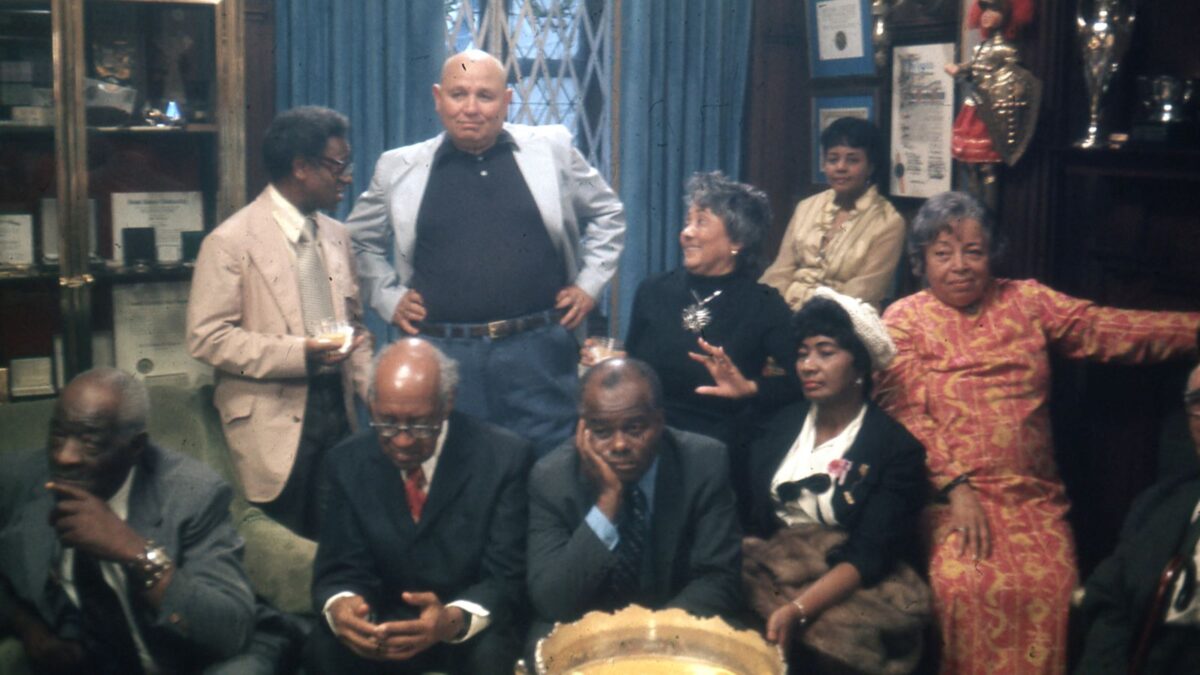
Picture this: it’s an overcast day in August 1972. You’re at a cocktail party at Duke Ellington’s townhouse in Harlem. As you awkwardly hold your glass of punch, you’re drowned in cacophonous conversation about art, politics, and society during one of the most vibrant intellectual and creative movements of the modern era. This is the experience of William and David Greaves’Once Upon a Time in Harlem, an immersive and masterfully rendered documentary that presents a living, breathing oral history of the Harlem Renaissance. Watching it feels like unearthing treasure.– Kent M. W. (full review)
One in a Million (Jack MacInnes and Itab Azzam)

“War is not the hardest thing a person can go through. It’s not as hard as what comes after.” These opening words are the guiding theme of Itab Azzam and Jack MacInnes’One in a Million, an epic saga of exile and assimilation centered on Israa and her family, Syrian refugees who flee their perilous, war-torn homeland to restart life in Germany. Filmed over a decade, the family story also doubles as a coming-of-age tale where both the joy of freedom and tumult of assimilation test every family member’s bonds. While the film’s episodic structure and, considering its sprawling canvas, relatively succinct runtime leave some details less explored, the filmmakers capture, with moving sensitivity, how perceived liberty doesn’t always mean true independence. – Jordan R. (full review)
The Only Living Pickpocket in New York (Noah Segan)

The thing about New York City is: it’s never as good as it was, yet it’s still better than anywhere else. The only thing constant is change, and the city is a paragon of that fact. There’s a dwindling number of remnants from the times when it was novel, dangerous, and vibrant. One of those relics is pickpocket Harry Lehman (John Turturro) in writer-director Noah Segan’sThe Only Living Pickpocket in New York. – Kent M. W. (full review)
Possible Love (Lee Chang-dong)

In a year of unknown quantities at the Venice Film Festival, Lee Chang-dong’s Possible Love has delivered the triumph for which fans of the elusive director had been hoping. Lee’s first feature since Burning, a modern masterpiece that blew away the competition in Cannes eight years ago, is another novelistic gem, the kind of richly detailed and intricately scripted yarn in which alluring themes like class, sex, and sociology are always on the table to be picked at. It also bears a much-wider and more-specific political purview than its predecessor, which comes at a cost for its dramatic pull from time to time. Lee’s nevertheless returned with the most substantial film I’ve seen in this year’s competition and one that is easily amongst the best of the year so far. – Rory O. (full review)
Primetime (Lance Oppenheim)

Robert Pattinson was born to play Chris Hansen. In the opening shot of Lance Oppenheim’sPrimetime—the documentary savant’s first foray into fiction, this one based on a true story—we immediately see the popularTo Catch a Predatorhost as the menace Oppenheim and first-time screenwriter Ajon Singh want us to understand him as. He’s cast in a devilish red light, swallowed by shadow, displayed through an eerie mini-DV grain, and reciting the lines “I will undress you and you will undress me” over and over in Hansen’s trademark brassy, rehearsed, does-he-really-sound-like-that (yes, he does) tone. The chilling music of the haunted fairytale score glitches in and out while children’s-show chimes ring ominously. – Luke H. (full review)
Queen at Sea (Lance Hammer)

Eleven years ago, Tom Courtenay arrived at the Berlinale with Andrew Haigh’s45 Years, an exquisitely observed study of emotional dilemma in which the British actor played a doddery romantic whose selfish tendencies threatened to get the better of him. He returns to the German festival with a performance of similar weight and resonance in Lance Hammer’sQueen at Sea, a film that centers on an even more challenging moral dilemma—albeit with results that are slightly less delightfully ambiguous than those Haigh managed in 2015. – Rory O. (full review)
Resident Evil (Zach Cregger)

Resident Evil, as a game series, has always borrowed heavily from cinema, whether it be the fixed angles and Kiyoshi Kurosawa inspirations of the first title to theTexas Chainsawriffs in the 7th. It’s less about the zombies, more the feeling of powerlessness and weird puzzles. Zach Cregger understands this on a deep level. His follow-up toWeaponsmay not be a pitch-perfect adaptation of the long-running lore, but it perfectly captures the spirit ofResident Evilas a whole, not to mention what it’s like to play it. The perfect title might actually have beenBiohazard.– Devan S. (full review)
Wicker (Alex Huston Fischer and Eleanor Wilson)

The jealousy of unhappy couples. The pettiness of mean girls. The frustration of insecure husbands. It’s a tale as old as time that’s curiously interpreted by writer-directors Eleanor Wilson and Alex Huston Fischer inWicker, an audacious, captivating film about an outcast woman, her wood-woven husband, and the village that collapses over their love. – Kent M. W. (full review)
Wildwood (Travis Knight)

Because of Coraline, LAIKA’s first effort as a studio and still its best-known, there’s an expectation that each subsequent project will fit comfortably within the horror realm, each new release a rite of passage for thousands of kids previously unaware that movies could give them nightmares. This will inevitably be the same case with Wildwood, director Travis Knight’s lavish and ambitious adaptation of the 2011 YA novel by Decemberists lead singer Colin Meloy, not least because it cold-opens with a young boy committing suicide, ripping out his insides to reveal he was an automaton operated by cogs. The gothic imagery hardly subsides from there, with Knight soon recreating the haunting image from Hitchcock’s The Birds, a murder of crows swarming over a playground ready to feast on unsuspecting children. – Alistair R. (full review)
You Can See Everything (Nathan Fielder and Lance Oppenheim)

Capping off an astounding season for documentaries, another one that will go down in the annals of non-fiction history is Nathan Fielder and Lance Oppenheim’s jaw-dropping, enigmatic character(s) study You Can See Everything. What begins as a stranger-than-fiction scenario in which a small crew, including the directors, were invited to the home of Elizabeth Holmes mere weeks before she began her prison sentence evolves into a thoroughly riveting study of the thin line between fact and fiction, public versus private personas, and perverse family dynamics hitherto never quite captured on screen before. Read Nick Newman’s review.
Your Mother Your Mother Your Mother (Bassam Tariq)

Latif (Mahershala Ali) is a righteous man. A religious man. He sees himself in a holy war to cleanse the world of his people’s enemies by picking up where the law ends. Those who know about his work justifiably condemn it, whether that be his Imam (Giancarlo Esposito’s Abdul Malik) or his wife. They don’t, however, condemn him. Because they understand his struggle. They know his pain. Why add to it? So, they grant him mercy instead. They accept him and hope he will one day find his way back. – Jared M. (full review)
More Films Now Playing in Theaters

Read all reviews here. For our NYC-specific repertory round-ups, including many films that will tour the country, bookmark NYC Weekend Watch.