















































26 years ago, as human civilization stepped into another new century, the world of literature expanded in exciting new directions. Creators of both fiction and non-fiction saw the new world through new lenses. Some told the old stories through new perspectives, and some found stories that were never told before. From fictional tales packed with emotions to revelatory non-fiction themes, the last 26 years have seen some phenomenal works in literature around the world.
In the last couple of decades, we’ve seen seminal non-fiction books that address significant questions about human existence, as well as fiction sensations ranging from sci-fi masterpieces like The Three-Body Problem to phenomenal thrillers like Gone Girl and everything in between, each breaking new ground with their originality and vision. While it would be criminally unfair to select just a handful of books to define the new era, here’s our ranked selection of some of the greatest books of the last 26 years.
8
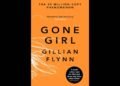
‘Gone Girl’ (2012)

The third novel penned by American author Gillian Flynn, this psychological crime thriller is easily her most successful and acclaimed work to date. Gone Girl revolves around Amy Dunne, who mysteriously disappears on her fifth marriage anniversary, leaving her husband, Nick, and everyone around them in shock. When the police discover seemingly damning evidence in Amy’s personal journal, Nick becomes the main suspect, triggering a huge public spectacle. Told from Nick and Amy’s respective POVs, the book unfolds competing and often contradictory perspectives on their lives, marriage, and the events that led to Amy’s vanishing.
A dark and twisted tale about a complicated marital relationship, Gone Girl is a deliciously thrilling read with dual unreliable narrators. A literary phenomenon of the 2010s, the crime fiction novel was uniquely groundbreaking in the way it flips the classic missing-person tropes and takes readers in completely unexpected directions. Gone Girl has since been widely praised for its ingenious writing and remains an icon of 21st-century thriller literature.
7
‘Sapiens: A Brief History of Humankind’ (2011)

Written by military historian Yuval Noah Harari and based on his series of lectures, Sapiens: A Brief History of Humankind is a popular science and popular history nonfiction book that surveys the history of Homo Sapiens. The account blends natural science, anthropology, and macro-history to survey the entire journey of human existence, beginning in the Stone Age and ending in the 21st century. The book covers four major turning points: the Cognitive, Agricultural, and Scientific revolutions, and the unification of humankind.
When first published, the book became a New York Times bestseller and earned global recognition, winning the National Library of China’s Wenjin Book Award for the best book published in 2014. While critics have acclaimed Sapiens: A Brief History of Humankind for making complex timelines, biology, and anthropology easy to understand, there is also substantial scholarly criticism of the same. However, the book became a publishing phenomenon and is widely considered one of the best books of its decade.
6
‘Brief Answers to the Big Questions’ (2018)

Stephen Hawking’s final literary work, Brief Answers to the Big Questions, is a popular science book that examines the greatest mysteries of the universe. Described as “a selection of the most profound, accessible, and timely reflections” from Hawking’s personal materials, including essays, lectures, and speeches, the book addresses four main subjects: “Why Are We Here?” “Will We Survive?” “Will Technology Save Us or Destroy Us?” and “How Can We Thrive?” The book also includes a foreword by Eddie Redmayne, who won an Academy Award for portraying Hawking in the 2014 film The Theory of Everything.
Published just a few months after Hawking’s death, Brief Answers to the Big Questions re-establishes the respected physicist’s deep faith in science and how essential it is in solving humanity’s biggest problems. The book came to be noted for making several striking predictions and warnings about the future of humanity, including topics of gene editing, artificial intelligence, and religion, and how those changes could impact the trajectory of human civilization. While the book did not win any major awards, it ranks among the top nonfiction titles of the 2010s and was widely praised as Hawking’s poignant final message to humanity.
5
‘The Girl with the Dragon Tattoo’ (2005)

An international bestseller written by Swedish author Stieg Larsson, The Girl with the Dragon Tattoo is the first book of the Millennium series. The novel follows Mikael Blomkvist, a disgraced journalist who is hired by a wealthy businessman to search for his niece, who disappeared 40 years earlier. Mikael takes the help of a skilled but deeply troubled hacker named Lisbeth Salander and dives into the family’s dark secrets to uncover the truth.
Published in 2005, a few months after Larsson’s death, The Girl with the Dragon Tattoo broke all the conventions of contemporary crime fiction with its atypical heroine, stark Nordic realism, and social critique. The novel became globally popular and remains Larsson’s most famous work, winning Sweden’s Glass Key Award and a British Book Award. The novel’s success set new trends for Nordic crime noir in mainstream art and culture, prompting highly acclaimed film adaptations in both Sweden and America.
4
‘Before the Coffee Gets Cold’ (2015)

A Japanese magic realism novel by Toshikazu Kawaguchi, Before the Coffee Gets Cold tells the story of people in a small basement café in Tokyo called Funiculi Funicula. The café allows its customers to travel back in time, but they must return to their present before their cup of coffee gets cold, or they will get trapped as a ghost. Their presence and actions in the past have no bearing on their present, and the travelers can only meet those people who have visited the café.
Before the Coffee Gets Cold is a charming, emotionally resonant meditation on how we perceive time, and a beautiful and hopeful reminder that though the past cannot be changed, the future holds possibilities of doing things differently. The book was an instant success in Japan when it was published in 2015, followed by the English translation by Geoffrey Trousselot published in 2019, which became a trending topic on social media. Before the Coffee Gets Cold was followed by five sequels, with the latest being Before I Knew I Loved You, published in 2026.
3
‘The Kite Runner’ (2003)

In his debut novel, Afghan-American author Khaled Hosseini pens one of the most powerful novels of 21st-century literature. The Kite Runner is set against the backdrop of the Afghan conflict of the 1970s and focuses on the Soviet–Afghan War and the exodus of Afghan refugees, as well as the rise of the Taliban regime. Growing up in a tormented nation, Amir and Hassan develop a bond that breaks on Amir’s act of transgression, leaving him to atone for two decades.

Deeply moving and often startling, The Kite Runner offers a raw window into the modern political and social history of Afghanistan, depicted through the story of two childhood friends and a father-son relationship. With themes of guilt, redemption, loyalty, and how they are impacted by classism, The Kite Runner is gut-wrenching and inspiring at the same time. The book became a global bestseller, earned widespread acclaim, and has since been adapted into several stage performances, a graphic novel, and a 2007 film by Marc Forster.
2
‘The Underground Railroad’ (2016)

Written by Afro-surrealist novelist Colson Whitehead, The Underground Railroad is an alternate-history novel that reimagines the historical titular underground network used by enslaved people to escape to the abolitionist North. Set in the 19th-century Antebellum South, the story centers on Cora, a young woman enslaved at a brutal Georgia plantation, who escapes using the titular route while being hunted down by a ruthless slave catcher. The novel depicts the titular escape network as a literal subterranean railroad system with safe houses and secret passages, tracking Cora’s escape state by state.
The Underground Railroad was massively successful at the time of its publication, winning several prestigious literary awards, including the Pulitzer Prize for Fiction, the National Book Award for Fiction, and the Arthur C. Clarke Award. Reviewers and critics have since praised the novel for its commentary on American history. Bold, imaginative, honest, and painful, The Underground Railroad turns a historical metaphor into a remarkable commentary on the past and present of America.
1
‘The Three-Body Problem’ (2008)

A Chinese hard science fiction novel by Liu Cixin, The Three-Body Problem is the first book in the Remembrance of Earth’s Past trilogy and is followed by The Dark Forest and Death’s End. The 2008 novel explores a fictional past, present, and future of Earth, where people encounter an alien civilization from a nearby star system with three Sun-like stars orbiting each other, defining the titular problem of astrodynamics. The book started in 2006 as a serialized story in Science Fiction World.
The Three-Body Problem became a sci-fi sensation and China’s most successful full-length novel of recent decades, earning endorsements from literary legends like George R.R. Martin and inspiring multiple adaptations. Liu Cixin’s work has been compared to that of Arthur C. Clarke and heavily praised for its mind-bending combination of hardcore physics, grand cosmic horror, and a distinct non-Western historical perspective on global affairs. The original edition won the Galaxy Award for Chinese science fiction, while the 2014 English translation by Ken Liu became the first novel by an Asian writer to win a Hugo Award for Best Novel.

- Release Date
-
March 21, 2024
- Network
-
Netflix
- Directors
-
Minkie Spiro, Jeremy Podeswa, Derek Tsang Kwok-Cheung, Andrew Stanton
- Writers
-
David Benioff, D.B. Weiss, Alexander Woo, Madhuri Shekar, Rose Cartwright