
















































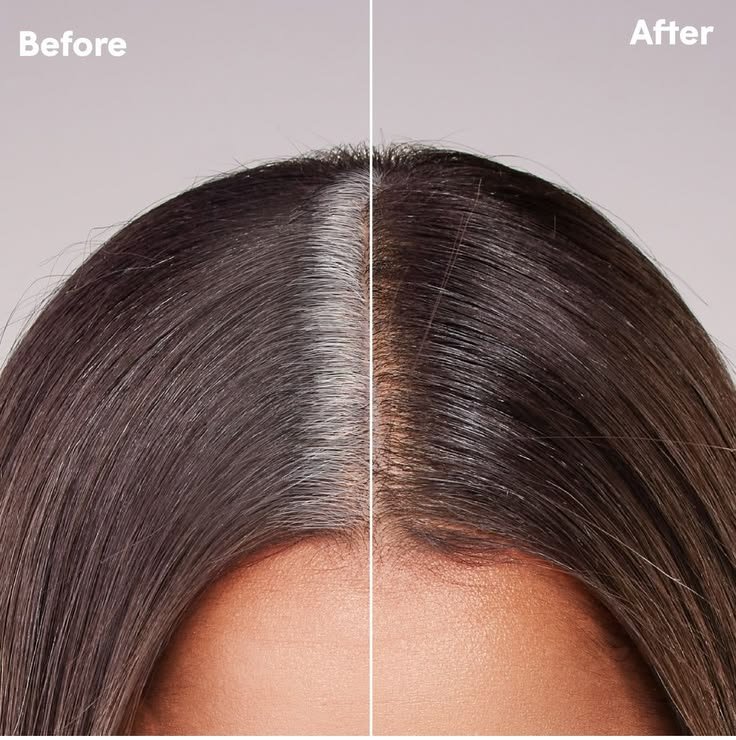
Freshly colored hair has a way of making everything feel a little more polished. Then, a few weeks later, the first silver strands begin appearing around the part, temples, or hairline. For anyone who regularly colors their hair and gets different hair treatments, gray regrowth can become noticeable well before it makes sense to schedule another full salon appointment.
Gray hair develops as hair follicles produce less melanin, the pigment responsible for hair color. While there is nothing unusual about going gray, you may not always want visible roots interrupting an otherwise fresh color job. That is where temporary root coverage comes in. Used carefully, it can soften the contrast between new growth and colored hair without making the roots look heavy, flat, or obviously concealed. The trick is knowing where to apply it and when to stop.
Check out how to cover gray roots without making them look obvious…
#1. Start With the Most Visible Areas
One of the easiest mistakes to make with root concealer is trying to cover every gray hair.Usually, that is unnecessary.
Look at where the regrowth catches your eye first. For many people, gray is most noticeable along the center part, around the temples, or directly beside the face. Focusing on these areas can make the entire hairstyle appear more even without applying pigment throughout the scalp.
The selective approach also helps preserve natural dimensions. Hair rarely consists of one completely uniform shade, particularly after highlights, balayage, or dimensional color.A little variation often looks much more believable than a perfectly solid block of color.Think of root coverage as blending rather than repainting.
#2. Choose a Root-Coverage Formula That Fits the Job
Temporary root products typically come as sprays, powders, creams, sticks, and mascara-like applicators. The best option depends largely on how much regrowth you have and where it appears.
Sprays are useful for covering broader sections quickly. They can work especially well across a wider part or when several centimeters of regrowth are visible, although overspray can make them less precise around the forehead and temples.
Powders and creams offer more control. They allow you to concentrate pigment directly onto individual strands or small sections, which can be particularly useful when only a few noticeable grays are peeking through.
Some newer products also combine formats. Brands such as Laura Geller Beauty offer a root touch-up for gray hair that pairs a concealing cream with a setting powder. Formats like this can be useful when you want more control than a spray provides, particularly around the part, temples, hairline, or brows.
Sticks and wand-style formulas offer similar precision and are often easy to carry for quick touch-ups away from home.Rather than assuming one type is universally better, think about the area you are trying to conceal. Broad regrowth calls for speed; scattered strands usually call for precision.
#3. Match the Root, Not Necessarily the Ends
Hair color can look considerably different from root to tip.Sun exposure, previous coloring, highlights, and fading can all leave the ends lighter than the natural or salon-treated shade close to the scalp. Choosing a root concealer based entirely on the ends of the hair may therefore produce an unnatural result.
Instead, compare the shade with the hair immediately surrounding the regrowth.If you fall between two colors, a slightly softer match can often be easier to blend than one that appears noticeably darker. Deep pigment placed directly against the scalp can make the part look sharper and more obvious, particularly when too much product is used.
Remember, the goal is to reduce the contrast between gray and colored strands—not necessarily to make every hair identical.
#4. Apply Less Than You Think You Need
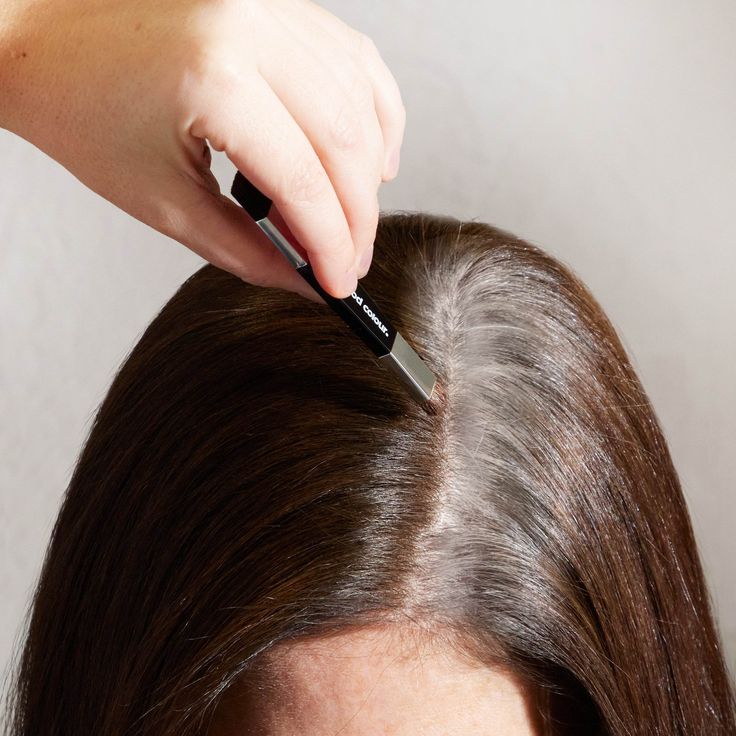
Root concealer is one of those beauty products where restraint usually produces the better result.Start with a small amount and build gradually.
When using a powder or cream, work the product onto the visible gray strands using short, controlled motions rather than pressing a large amount directly onto the scalp.With sprays, hold the product at the recommended distance and apply in short bursts. Shielding the forehead with a tissue or your hand can also help prevent color from landing on the skin.
After the first application, step away from the mirror.Looking at your hair from a normal distance provides a much better indication of whether the roots actually need more coverage than examining individual strands from a few inches away.What looks slightly imperfect up close may already appear completely blended in everyday life.
#5. Keep the Hairline Soft
The hairline deserves particularly careful application because excess pigment against visible skin can quickly create an artificial-looking border.Rather than drawing a solid line around the forehead, lightly work color through the individual strands that need it.If the result looks too sharp, use a clean brush, spoolie, or fingertip to soften the edge.
The same principle applies along the part. Avoid creating one perfectly defined strip of pigment running across the scalp. Feathering the color slightly into the surrounding hair helps temporary coverage disappear more naturally.A little irregularity is often what makes the finished result convincing.
#6. Work With Your Hairstyle
Sometimes the easiest root touch-up requires very little product at all.Changing the placement of your part can temporarily make regrowth less noticeable, particularly when gray hairs are concentrated along one line. Try moving a center part slightly to the side or creating a softer, less precise part.
Texture can also help disguise contrast.Soft waves, volume around the crown, curls, or a loose blowout create dimension and movement. Sleek, very flat hairstyles expose more of the scalp and part, which can make even relatively minor regrowth appear more prominent.
Hair accessories offer another easy option. Headbands, scarves, clips, and strategic updos can conceal troublesome areas on days when there simply is not time for detailed touch-ups.
Those maintaining dyed red or copper hair may also benefit from keeping ginger hair color vibrant, since root coverage tends to blend more naturally when the lengths have retained their intended tone.
#7. Don’t Forget About Texture
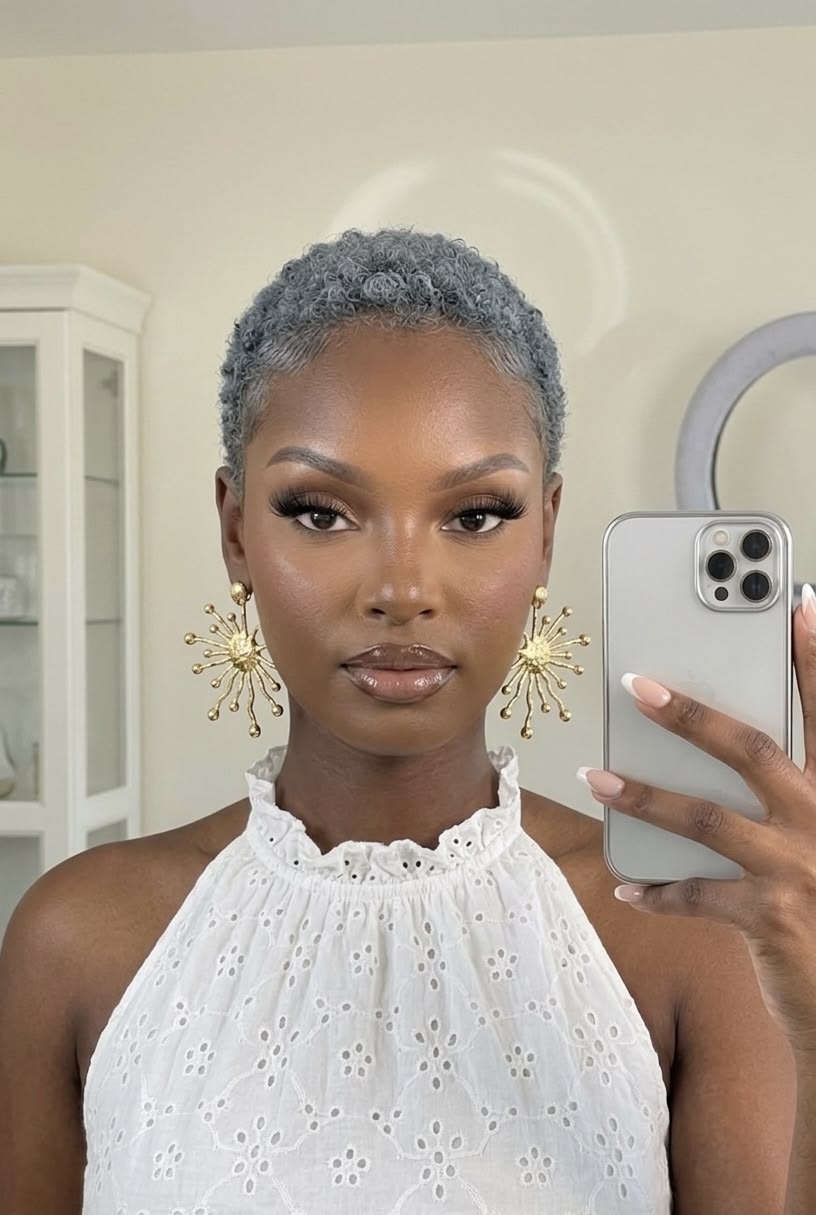
Color is only part of what makes roots noticeable.Freshly washed, very flat hair tends to expose the scalp more clearly. A little lift at the roots can diffuse the visual contrast between silver strands and the surrounding color.
Volumizing mousse, dry shampoo, or gentle backcombing around the crown may therefore make regrowth less obvious even before concealer is applied.Just avoid layering excessive styling products with temporary pigment. Too much buildup can leave roots looking dull or stiff rather than naturally blended.
#8. Avoid Turning a Temporary Fix Into Constant Coloring
Temporary root concealer works best when treated as exactly that: temporary.It can bridge the period between professional appointments without requiring another round of permanent color every time a few millimeters of growth appear.
This can be particularly useful for anyone who highlights, lightens, relaxes, or otherwise chemically processes their hair. Repeated hair treatments can make strands more vulnerable to dryness and breakage, so extending the time between full coloring sessions may sometimes be preferable to constantly chasing new growth.
Temporary coverage also gives you flexibility.You can disguise roots ahead of an important meeting, dinner, photograph, vacation, or event and wash the color away afterward rather than committing to another dye session.
#9. Know When to Leave a Little Gray Alone
Perhaps the most useful rule is knowing when to stop.Gray coverage does not have to mean making every silver strand disappear. In fact, a few visible hairs mixed naturally throughout the roots can often look more convincing than coverage that is too dense or opaque.Focus on reducing the strongest areas of contrast and leave the less noticeable strands alone.
The best root touch-up should not announce itself. Ideally, it simply makes the regrowth fade into the overall hairstyle so that your color, cut, and texture become the focus again.Between salon appointments, achieving that effect usually comes down to three things: choosing the right type of product, applying it precisely, and remembering that polished does not have to mean perfect.
Featured image: Style Rave Studio / AI-generated visual
—Read also