

































When Thomas Mann visited post-war Germany in 1949, he was perhaps the most famous living German author. More than that, Mann was an exemplar of a “good German,” someone who had disavowed the Nazi government, was stripped of his citizenship, and forced into exile.
In Paweł Pawlikowski’s Fatherland, Mann (Hanns Zischler) tours the ruins of a partitioned country with his daughter Erika (Sandra Hüller). Their journey from Frankfurt to Weimar captures the range of German society, from Nazi collaborators to political prisoners, from the wealthy to the dispossessed.
Mann tries to frame his journey within the works of Goethe, in part because he has been given an award dedicated to the writer. Hüller’s Erika, on the other hand, is grieving over the suicide of her brother Klaus (August Diehl), her closest confidant.
I spoke with Pawlikowski on Fatherland‘s opening weekend in New York.
The Film Stage: What struck me about Fatherland is its overwhelming grief. The layers of grief that Erika faces with her brother Klaus, that Thomas Mann faces returning to a ruined country, the grief of coping with the Allies and Russia.
Paweł Pawlikowski: It depends on who watches it, I suppose. When you make a slightly understated film, it depends on who’s watching it as to what they get out of it. That’s the purpose of making films which don’t advertise broadly what they’re doing, which is the norm these days. Filmmakers will just tell you what you’re supposed to be feeling and thinking all the time.
Back to your question, yeah, it’s largely about grief. And how would you cope with grief? How do you go on with life when somebody’s committed suicide? How do you cope with the loss of your country?
You credit Colm Tóibín in the credits.
It was just a gesture because a producer sent me his book [The Magician] to possibly adapt into a biopic or TV series. Mann’s life, it’s a huge story. I just picked one episode from it, one that is not actually from the book. But I wanted to make a gesture towards Colm who is a great writer.
Are they Mann’s actual speeches? Did you adapt them?
No, they are Mann’s speeches. In fact, one of them is recorded. You can find it in the Hessischen Rundfunks, the German sound archives. They are also printed. I used two original speeches, but I also conflated the first one with another speech Mann made called Über Demokratie, About Democracy. The quote from Clemenceau about the German romantic cult of death wasn’t in the Frankfurt speech. I added it because it kind of made sense in the story.
What drew you to Thomas Mann to begin with?
I like some of his books very much. He’s not my favorite, the passionate love of my life. I wouldn’t put his portrait above my desk, you know. But I’ve always liked his shorter stories and things like The Magic Mountain. The reason I did this was that trip in 1949. It’s an imagined fictional story using real people, perhaps slightly irresponsibly. If it works, it works. If it doesn’t, then everyone will blame me.
It wasn’t so much Thomas Mann, in fact. I was interested in that triangle of Mann and Erika and Klaus. I was interested in the story of the most famous German writer alive at the time, coming back to his country after 16 years in exile. And the country has changed beyond recognition. It’s in ruins. A country that turned its back on him.
I loved that situation. And the question, “Where is home?” So I was just freely using Mann’s biography to tell an intimate, personal story. There are so many stories you could draw from the Mann family. There are so many points of departure. Maybe I should start an industry of making films out of fragments of the Mann family. I would never tackle the whole story, this huge philosophical soap opera that was the Mann family, you know?
But people ask me, “Are you interested in Thomas Mann?” Yes, relatively. But I was more interested in this moment, and in these three characters entangled together. It’s the makings of a Greek tragedy: the brother and sister, the daughter and father, the father and son. It’s just so rich. You don’t need any more. And fused with the historical factor, it gives me something very powerful. Which I do everything in my means to downplay in my typical style.

Photo courtesy of Aleksandra Modrzejewska.
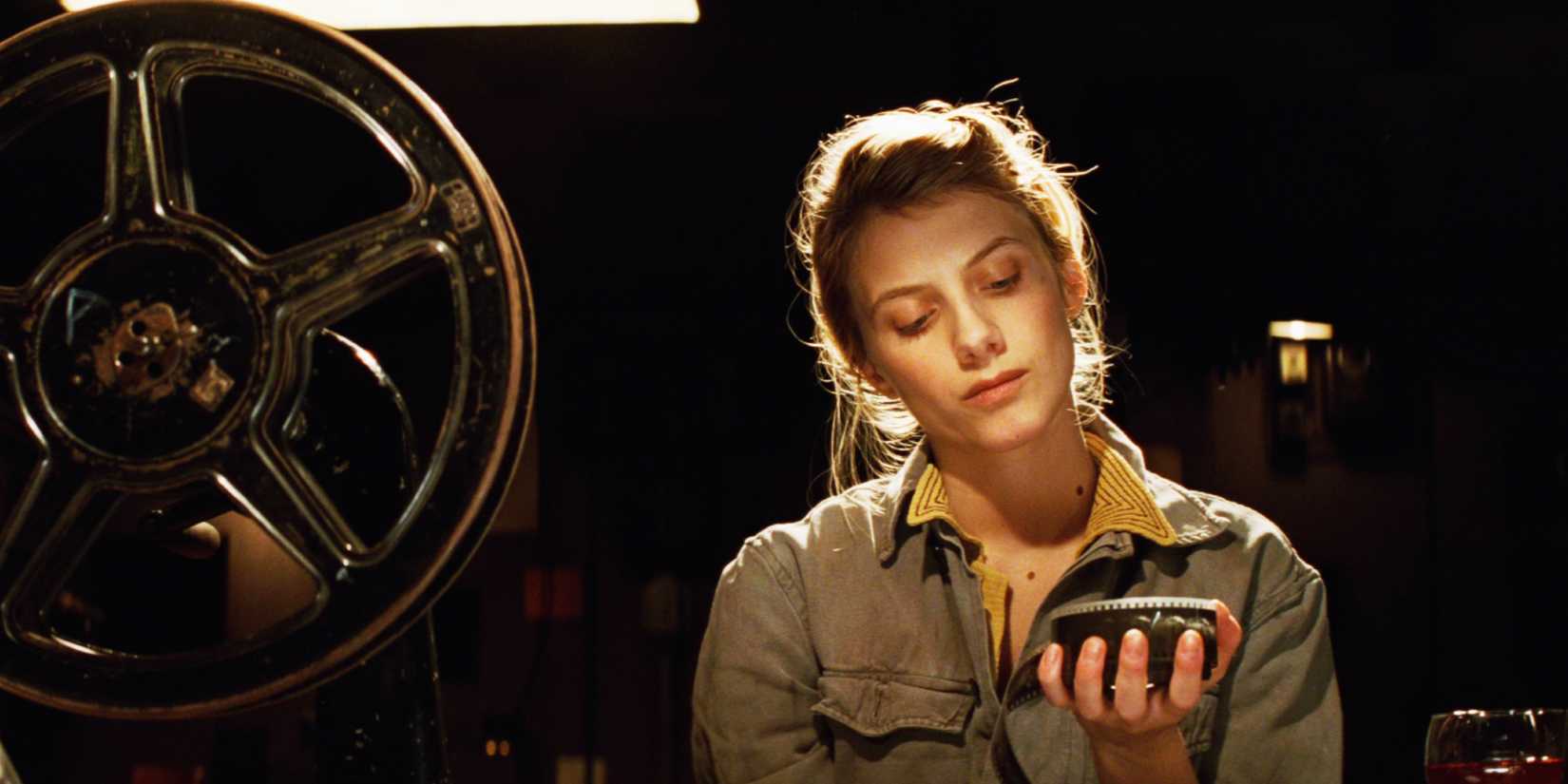
Can you talk about working with your performers? Hüller has a scene where she slaps Gründgens at a bar that seems completely spur-of-the-moment. How do you work with her to achieve that?
That was a pretty precise scene, a pretty precisely written one. I fiddled with it a bit; the slap came at the right time. I even timed it with the music in the background, so they could work together.
Some scenes are really tightly written. Others, I kind of massage into place, just before shooting, or even while shooting. I have the luxury of editing as I shoot. We shoot for five days and take a day off to relax. Then one day to put the footage together. There’s not too much editing because there’s not much coverage. I put the building blocks and the film starts emerging for me, like some kind of documentary.
Every actor is different. Every actor has a different process. Sandra is a phenomenal actress who has her own needs, her own process. She has to work from within all the time. There’s nothing mechanical about her acting, nothing technical. I mean, she has technique like nobody else I’ve met, but it has to come out from inside her. She has to plug into it in her own way.
I kind of limited her acting by not doing coverage. Not having the camera catch her work, you know? Our shots are very set, very precise. She has to be brilliant within the shot, the frame. That can be difficult, but it’s also the beauty of this kind of filmmaking. She took to it really well after a while. First, she was a bit surprised, but then she really kind of understood that the image and the performance come together to kind of enhance each other.
It was fascinating watching her. There would be one take in those important scenes where you got goosebumps. The slap with Gründgens, there is this wonderful moment where her face changes while he’s saying these insulting things. Insulting and relatively true as well. That’s why she slaps him, because he’s saying, “It’s easy for you not to sell your soul, you’re a nepo baby, you got it easy. Money, languages, contacts, your father.” What happens in her face is just mind-blowing. There’s always one magical take where it seems to just happen somehow.
What’s really challenging is that she’s not allowed to show her emotions in public.
She does blow her fuse, twice, actually. But the drama in her face is unbelievable. That’s what makes the film for me. It’s like, “Wow, what’s happening there?”
A lot of performance you can get from the context of the shot. It’s not just about what the actor does, but how you hold the shot, where the shot comes from. You kind of know what they’re feeling, even if they’re not showing it. Hans Zischler really underplays Thomas Mann, but you get what he’s feeling without him having to do much. Maybe like a flick of the eyebrow tells you so much. The little twinkle in his eye, or tiny gestures. The context gives them meaning.
It’s a bit suicidal these days to do that because in cinema now everything’s big and noisy and underlined and music tells you what to think and actors are acting away furiously. It’s going against the grain somewhat. It clearly will divide the audience.
How hard was it to recreate the era?
It was time-consuming. We spent a lot of time looking for locations in Lower Silesia, an area of Poland that belonged to Germany before the Second World War. We spent a lot of time with my production designers Marcel Sławiński and Katarzyna Sobańska and with my DP Łukasz Żal driving around, taking photographs, identifying what we could kind of piece together and make a world out of. Time-consuming but very satisfying in the end. In the beginning, I had misgivings that we could actually do it.
The trick is to find really good extras. We spent five months looking for extras in every location where we were shooting. My assistants looked for good faces, faces from the period who don’t look like people today. That helps authenticate the period as well.
I don’t know how you got those opening shots in Frankfurt, following a motorcycle down block after block of wreckage.
It’s a long street in Legnica in Silesia. It used to be Liegnitz in German. A very down-at-the-heels area, poor, impoverished, run-down. It looked pretty damaged, then we added our own rubble. Our production design had this kind of three-dimensional rubble, and then above eye level we added some digital effects. We had about 600 meters of good street, and then the extras were great. It was a painstaking job to create that.
I loved the nightclub scene, a very de-glamorized version of what would appear in an MGM film. The lighting is flatter; you’re often shooting at floor level to show these shuffling dancers. It’s something that would have really existed.
It’s like good photo reportage from era. That was our point of reference: journalist photography from the period. Cartier-Bresson. Not glossy and not ornamental.
Talking about collaborating with your DP Łukasz Żal, how do you build those spectacular frames?
We set up the shots together. I’m kind of more into framing. He’s more involved with lighting, but actually we’re symbiotic. So you can’t tell where the border is.
The film is based around the image. The mise-en-scène serves the image rather than having the camera covering the scene in a traditional way. Building the image is a crucial component. We started working that way on Ida. We don’t need to talk too much, we just kind of prepare it together.
Having said that, the production designers Marcel and Katarzyna are very closely involved from quite early on in the process. Like Łukasz, they also worked on Ida and Cold War.
So it’s not just the DP coming and making shots. It’s more like building the film with the help of the DP and the production designers. People say photography, it’s actually about the image, image-making. How do you frame? What faces are in the shot? What’s the relationship between foreground and background? What’s in focus?
Also, how long you hold onto a shot. You take an editing credit on Fatherland. Had you done that before?
No, I never took a credit, but I’m very involved in editing. I’m always in the cutting room making decisions. On this one I had this young editor [Piotr Wójcik] who was just supposed to press buttons, because I hate all the digital stuff. But he ended up being very good. So he got a credit as well.
I love editing, and, like I said, I edit as I’m shooting. Every five days, I look at the cut and see what the film is more clearly. I kind of forget about the script, and just see how this documentary that I’m making is coming along.
Is it faster to shoot without coverage?
Yes, but to get the shot right takes a bit of time. We have to reframe sometimes. Then I try to combine the background action with extras with the foreground. It’s a bit more fiddly in that way, but at least you don’t have to move the lights around many times.
What must have been frustrating for Mann was that he didn’t have any choices between “Mickey Mouse and Stalin,” as Klaus put it. Mann’s looking for a way to restore his country to what Goethe imagined, but he has no good path.
He got to the limits of politics. In the end, the good thing about being a great artist is that he can always write books. He can move to Switzerland, where everyone goes if they don’t know where they go or where they belong. That is if they have enough money.
Politically, he was hoping to unify on the basis of this humanist culture. It’s clearly not working. His way of thinking, his language, are at odds with the language of the time, with the simple narratives that are being pushed on both sides. So, yeah, there’s no political way out.
Mann realizes, together with Erica and Klaus, that they’ve lost their fatherland, their homeland. Which a lot of people face today. So the film has its kind of contemporary resonance.
Your film still shows, through Mozart and Bach, through architecture and landscapes, that there is a Germany worth remembering for Mann.
Part of that Germany is in his books. He was such a German writer. He famously said, “Where I am, that’s where German culture is.” A bit over the top, but when you think about it, Germany did exist in culture above all its divisions. There is a continuum. Of course, the country itself was destroyed and polarized, like the world is today. But we can hope that culture is still above that. I mean, even today there’s hope, right?
Fatherland is now in theaters.