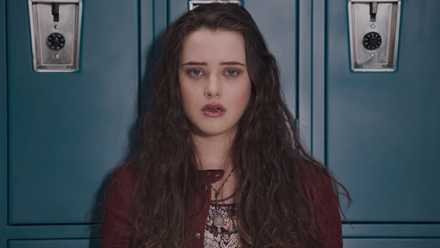
In the age of binge-watching, chances are that when a show is good, you’ll keep pressing “continue watching” when Netflix asks, “Are you still watching?” The story must keep you engaged, so you want to find out what happens next. One such example of this is the four-season series 13 Reasons Why. An adaptation of Jay Asher‘s young adult novel, 13 Reasons Why examined the aftermath of high school student Hannah Baker’s (Katherine Langford) 13 cassette tapes left following her suicide. With each tape explaining why, it’s up to her classmate Clay Jensen (Dylan Minnette) to uncover the stories of bullying, sexual assault, and trauma that ultimately led to her death.
One of the most difficult shows to come to the streamer, the series provided an explicit portrayal of heavy themes in an authentic manner. 13 Reasons Why was an important series that opened the floor for necessary conversations, while entertaining audiences along the way. With 49 gripping episodes, 13 Reasons Why showcases a strong ensemble in a character-driven drama that’s perfect for a weekend binge.
’13 Reasons Why’ Walked So ‘Euphoria’ Could Run
After sending shockwaves over the controversial central topic, 13 Reasons Why evolved into a fascinating character study of the struggles modern teenagers face in their formative years. The first season focused on Hannah’s suicide and what led her to her decision. Through the cassette confession device, her reasons sent shockwaves through the school community. The later seasons tackle the fallout from the lawsuit brought by Hannah’s parents and many of the characters’ journeys toward truth, healing, and accountability. With plotlines including sexuality, homophobia, school shootings, and, yes, murder, 13 Reasons Why is an example of a kitchen sink drama— anything can and will happen.
Collider Exclusive · Oscar Best Picture Quiz Which Oscar Best Picture Is Your Perfect Movie? Parasite · Everything Everywhere · Oppenheimer · Birdman · No Country
Five Oscar Best Picture winners. Five completely different visions of what cinema can be — and what it can do to you. One of them is the film that was made for the way your mind works. Ten questions will figure out which one.
🪜Parasite
🌀Everything Everywhere
☢️Oppenheimer
🐦Birdman
🪙No Country for Old Men
01
What kind of film experience do you actually want? The best movies don’t just entertain — they leave something behind.
02
Which idea grabs you most in a film? Great films are driven by a central obsession. What’s yours?
03
How do you like your story told? Form is content. The way a story is shaped changes what it means.
04
What makes a truly great antagonist? The opposition defines the protagonist. What kind of opposition fascinates you?
05
What do you want from a film’s ending? The final note is the one that lingers. What do you want it to sound like?
06
Which setting pulls you in most? Where a film takes place shapes everything — mood, stakes, what’s even possible.
07
What cinematic craft impresses you most? Every great film has a signature — a technical or artistic element that makes it unmistakable.
08
What kind of main character do you root for? The protagonist is the lens. Who you choose to follow says something about you.
09
How do you feel about a film that takes its time? Pace is a choice. Some films sprint; others let tension accumulate slowly, deliberately.
10
What do you want to feel walking out of the cinema? The best films leave a mark. What kind of mark do you want?
The Academy Has Decided Your Perfect Film Is…
Your answers have pointed to one Oscar Best Picture winner above all others. This is the film that was made for the way your mind works.
Parasite
You are drawn to films that operate on multiple levels simultaneously — that begin in one genre and quietly, brilliantly migrate into another. Bong Joon-ho’s Parasite is a film about class, desire, and the architecture of inequality that manages to be darkly funny, deeply suspenseful, and genuinely shocking across a single extraordinary running time. Your instinct is for cinema that hides its true intentions until the moment it’s ready to reveal them. Parasite is exactly that — a film that rewards close attention and punishes assumptions, right up to its devastating final image.
Everything Everywhere All at Once
You want it all — and this film gives you all of it. The Daniels’ Everything Everywhere All at Once is one of the most maximalist films ever made: action comedy, multiverse sci-fi, family drama, existential crisis, and a genuinely earned emotional core that sneaks up on you amid the chaos. You are someone who responds to ambition, who doesn’t want cinema to choose between being entertaining and being meaningful. This film refuses that choice entirely. It is overwhelming by design, and its overwhelming nature is precisely the point — because the feeling of being crushed by infinite possibility is exactly what it’s about.
Oppenheimer
You are drawn to cinema on a grand scale — films that understand history not as a backdrop but as a force, and that place their characters inside that force and watch what happens. Christopher Nolan’s Oppenheimer is a film about the terrifying gap between what we can do and what we should do, told with the full weight of one of the most consequential moments in human history behind it. You want your films to feel important without feeling self-important — to earn their ambition through sheer craft and the gravity of their subject. Oppenheimer does exactly that. It is enormous, complicated, and refuses easy comfort.
Birdman
You are drawn to films that foreground their own construction — that make the how of the filmmaking part of the what it’s about. Alejandro González Iñárritu’s Birdman, shot to appear as a single continuous take, is cinema examining itself through the cracked mirror of a fading actor’s ego. You respond to formal daring, to the feeling that a film is doing something that probably shouldn’t be possible. Michael Keaton’s performance and Emmanuel Lubezki’s restless camera create something genuinely unlike anything else — a film that is simultaneously about creativity, relevance, self-destruction, and the impossibility of ever truly knowing if your work means anything at all.
No Country for Old Men
You are drawn to cinema that trusts silence, that refuses to explain itself, and that treats dread as a form of meaning. The Coen Brothers’ No Country for Old Men is a film about the arrival of a new kind of evil — implacable, arbitrary, and utterly indifferent to the moral frameworks we use to make sense of the world. It is one of the most formally controlled films ever made, and its controlled restraint is what makes it so terrifying. You want your films to haunt you, not comfort you. You are not interested in resolution if resolution would be dishonest. No Country for Old Men is honest in a way that most cinema never dares to be.
The main reason 13 Reasons Why is an addictive binge-watch is the characters and the drama surrounding them. Starting as a compelling mystery thriller and leading into a young adult soap opera, 13 Reasons Why always has another surprise coming for the viewers. As in shows like Tell Me Lies and Euphoria, the structure of the series allows multiple storylines to run in parallel, ultimately culminating in the larger story. Whether you like the outcomes or are left in shock by the results, 13 Reasons Why is smartly plotted for a non-stop watch. Just as on similar shows, every action has a reaction, and the domino effect drives the story toward its larger purpose.
With a wide-spanning cast, you certainly have the characters you love and others that you don’t. As the cog in the post-inciting action narrative, Minnette’s protagonist moves from timid boy to a young man, albeit deeply traumatized, who anchors the community. No character goes from a bad boy to a selfless individual more so than Justin Foley (Brandon Flynn). His arc of redemption is unique because he is one of the few individuals who learns from his troubled past. There are individuals like Jessica Davis (Alisha Boe), Alex Standall (Miles Heizer), and Tyler Down (Devin Druid), who experience major traumatic events, evolving into fascinating representations of emotional recovery. Then, there are certain characters, like Bryce Walker (Justin Prentice) and Monty de la Cruz (Timothy Granaderos), who serve as primary antagonists, and you are eager to see their ultimate comeuppance. Though the teenagers are the main focus, the adults are affected by the events, leading to different perspectives revolving around how to be a parent after trauma.
‘13 Reasons Why’ managed a strong first season, but what happened to it after?
’13 Reasons Why’ Acknowledges Its Controversial Content
It must be acknowledged that 13 Reasons Why has been accused of glamorizing suicide and not helping to contextualize mental health issues. The original cut of the show featured Hannah’s suicide, before Netflix later removed it after concerns that the graphic depiction could lead to copycat attempts. Though it took two years to happen, it was a major and important step in helping the series solidify its place in television history.
While some viewers felt that the series was “misery porn,” with the show using intense trauma for shock rather than nuanced exploration of the topics at hand, the storylines, though sometimes sanitized, kept viewers glued to their screen as curiosity peaks just as the episode’s credits roll. 13 Reasons Why is hard to stop watching, but it may require breaks and pauses to digest the darker moments. But with its intriguing stories and thoughtful characters, 13 Reasons Why is a must-watch if you’re looking for something to binge this weekend.
We use cookies on our website to give you the most relevant experience by remembering your preferences and repeat visits. By clicking “Accept All”, you consent to the use of ALL the cookies. However, you may visit "Cookie Settings" to provide a controlled consent.
This website uses cookies to improve your experience while you navigate through the website. Out of these, the cookies that are categorized as necessary are stored on your browser as they are essential for the working of basic functionalities of the website. We also use third-party cookies that help us analyze and understand how you use this website. These cookies will be stored in your browser only with your consent. You also have the option to opt-out of these cookies. But opting out of some of these cookies may affect your browsing experience.
Necessary cookies are absolutely essential for the website to function properly. These cookies ensure basic functionalities and security features of the website, anonymously.
Cookie
Duration
Description
cookielawinfo-checkbox-analytics
11 months
This cookie is set by GDPR Cookie Consent plugin. The cookie is used to store the user consent for the cookies in the category "Analytics".
cookielawinfo-checkbox-functional
11 months
The cookie is set by GDPR cookie consent to record the user consent for the cookies in the category "Functional".
cookielawinfo-checkbox-necessary
11 months
This cookie is set by GDPR Cookie Consent plugin. The cookies is used to store the user consent for the cookies in the category "Necessary".
cookielawinfo-checkbox-others
11 months
This cookie is set by GDPR Cookie Consent plugin. The cookie is used to store the user consent for the cookies in the category "Other.
cookielawinfo-checkbox-performance
11 months
This cookie is set by GDPR Cookie Consent plugin. The cookie is used to store the user consent for the cookies in the category "Performance".
viewed_cookie_policy
11 months
The cookie is set by the GDPR Cookie Consent plugin and is used to store whether or not user has consented to the use of cookies. It does not store any personal data.
Functional cookies help to perform certain functionalities like sharing the content of the website on social media platforms, collect feedbacks, and other third-party features.
Performance cookies are used to understand and analyze the key performance indexes of the website which helps in delivering a better user experience for the visitors.
Analytical cookies are used to understand how visitors interact with the website. These cookies help provide information on metrics the number of visitors, bounce rate, traffic source, etc.
Advertisement cookies are used to provide visitors with relevant ads and marketing campaigns. These cookies track visitors across websites and collect information to provide customized ads.


































![Guy Ritchie’s Fan Favorite Henry Cavill Spy Thriller Had Cancelled Sequel [Exclusive]](https://static0.colliderimages.com/wordpress/wp-content/uploads/sharedimages/2026/06/citizen-vigilante-poster.jpg?q=49&fit=contain&w=480&dpr=2 "Guy Ritchie’s Fan Favorite Henry Cavill Spy Thriller Had Cancelled Sequel [Exclusive]")