Neuromancer is finally hacking its way into reality, with a trailer released at San Diego Comic-Con this week. It includes several iconic lines and visual cues, plus all the action one could want from an adaptation of William Gibson‘s 1984 novel. Showrunners Graham Roland and J.D. Dillard seem to have captured the spirit of the story perfectly, but we won’t know for sure until next year. Now that we know everything looks and sounds right, the big question is how this show will approach its themes. As fun as the cyberpunk genre can be, Neuromancer doesn’t work unless it’s portrayed as a true corporate dystopia.
Neuromancer follows a highly skilled hacker named Case (Callum Turner), who is enlisted into a crew of criminals intent on robbing one of the wealthiest families in the world. Case has his own tragic reasons for participating in this heist, and he learns that each of his colleagues do as well. What unites them all is the desperation of living in this technological dystopia, where freedom and social mobility are at an all-time low. The show will need to confront all this head-on, and there’s no reason to suspect that it won’t. At the same time, it’s easy to imagine any of today’s major streamers softening a message about giant tech conglomerates — let alone Apple TV.
‘The Sprawl’ Is More Than Set-Dressing in ‘Neuromancer’
Neuromancer takes place in the near future, at a time when power has largely shifted away from governments and into the hands of corporations. This is now a common staple of the cyberpunk subgenre, but it’s more than a worldbuilding detail. Here, unchecked technological advancement has given immense power to a few individuals and corporations — and wreaked havoc on social order in the process.
Collider Exclusive · Sci-Fi Survival Quiz Which Sci-Fi World Would You Survive? The Matrix · Mad Max · Blade Runner · Dune · Star Wars
Five universes. Five completely different ways the future went wrong — or sideways, or up in flames. Only one of them is the world your instincts were built for. Eight questions will figure out which dystopia, galaxy, or desert wasteland you’d actually make it out of alive.
💊The Matrix
🔥Mad Max
🌧️Blade Runner
🏜️Dune
🚀Star Wars
01
You sense something is deeply wrong with the world around you. What do you do? The first instinct is often the truest one.
02
In a world of scarcity, what resource do you guard most fiercely? What we protect reveals what we believe survival actually requires.
03
What kind of threat keeps you up at night? Fear is useful data — if you’re honest about what you’re actually afraid of.
04
How do you deal with authority you don’t trust? Every dystopia has a power structure. Your approach to it determines everything.
05
Which environment could you actually endure long-term? Survival isn’t just tactical — it’s physical, psychological, and very much about where you are.
06
Who do you want in your corner when things fall apart? The company you keep is the clearest signal of who you actually are.
07
Where do you draw the line — if you draw one at all? Every survivor eventually faces a moment that tests what they’re actually made of.
08
What would actually make survival worth it? Staying alive is one thing. Having a reason to is another.
Your Fate Has Been Calculated You’d Survive In…
Your answers point to the world your instincts were built for. This is the universe your temperament, your survival instincts, and your particular brand of stubbornness were made for.
The Resistance, Zion
The Matrix
You took the red pill a long time ago — probably before anyone offered it to you. You’re a systems thinker who can’t help but notice the seams in things.
You’re drawn to understanding how the system works before figuring out how to break it.
You’d find the Resistance, or it would find you — your instinct for spotting constructed realities is the machines’ worst nightmare.
You function best when you have access to information and the freedom to act on it.
The Matrix built an airtight prison. You’d be the one probing the walls for the door.
The Wasteland
Mad Max
The wasteland doesn’t reward the clever or the well-connected — it rewards those who are hard to kill and harder to break. That’s you.
You don’t need comfort, community, or a cause larger than the next horizon.
You need a vehicle, a clear threat, and enough fuel to outrun it — and you’re good at all three.
You are unsentimental enough to survive that world, and decent enough — just barely — to be something more than another raider.
In the wasteland, that distinction is everything.
Los Angeles, 2049
Blade Runner
You’d survive here because you know how to exist in moral grey areas without losing yourself completely.
You read people accurately, keep your circle small, and ask the questions others prefer not to answer.
In a city where humanity is a legal designation rather than a feeling, you hold onto something that keeps you functional.
You’re not a hero. But you’re not lost, either.
In Blade Runner’s world, that distinction is everything.
Arrakis
Dune
Arrakis is the most hostile environment in the known universe — and you are precisely the kind of person it rewards.
Patience, discipline, and political awareness are your core strengths — and on Arrakis, they’re survival tools.
You understand that the long game matters more than any single victory.
Others come to Dune and are consumed by it. You’d learn its logic and earn its respect.
In time, you wouldn’t just survive Arrakis — you’d begin to reshape it.
A Galaxy Far, Far Away
Star Wars
The galaxy far, far away is vast, loud, and in a constant state of violent political upheaval — and you wouldn’t have it any other way.
You find meaning in being part of something larger than yourself — a cause, a crew, a rebellion.
You’d gravitate toward the Rebellion, or the fringes, or whatever pocket of the galaxy still believes the Empire’s grip can be broken.
You fight — not because you have to, but because standing aside isn’t something you’re capable of.
In Star Wars, that willingness is what makes all the difference.
Gibson’s writing brilliantly evokes the claustrophobia of this setting. He describes the amazing new technology of the future — virtual reality, genetic engineering, living space stations, and more — yet he grounds it all in narrations of bleak day-to-day lives. The average person in his setting, “The Sprawl,” still scrounges for a living. Rather than improving their lives, the constant technological growth seeks to extract more from them at every turn.
As well as this works on the page, it is a daunting task to bring it to the screen. The Sprawl is full of visual spectacles, some of which we’ve already seen in the trailer — from the sensory assault of Chiba City to Molly Millions’ (Briana Middleton) inset lenses and razor claws. It will seem like a shame for a TV show to pull us out of a fight or a chase to remind us of the human cost, but without that, there is no story.
This balancing act will be especially tricky due to the timing of the TV show, with real-life tech companies amassing more wealth than ever and pushing for the rapid adoption of “AI” software. These programs do not have much in common with the self-aware digital beings in Gibson’s writing, but critics and viewers will certainly be on the lookout for parallels. Hopefully they won’t miss the more apt comparisons — the similarities between the Tessier-Ashpool family and the billionaires of today, for example.
There Can Be No Heroes or Villains in ‘Neuromancer’
Callum Turner in NeuromancerImage via Apple TV
The untenable wealth disparity of The Sprawl is an underlying force in all the character arcs of Neuromancer, and it’s essential to the shape of this story. The audience is naturally inclined to judge each character’s actions as heroic or cowardly, but the story constantly reminds us that they have little choice in what they do — for better or worse. Despite all the technology at their disposal, they are caught in a social machine, and their only hope of surviving is to follow the path laid out before them.
This kind of underlying tragedy may be hard to translate to TV, especially when it clashes with the action of the heist — not to mention the sheer fun of this absurd setting. In Gibson’s novel, Case is introduced as a drug addict, indifferent to his own fate and that of the few people close to him. He becomes more sympathetic as the story goes on, but some readers can never quite come around to actually “liking” him. This can be a tougher sell on TV than in a novel, and adaptations often go out of their way to make characters easier to root for.
Hopefully, this show doesn’t take that route. We should see Case and all his colleagues, warts-and-all. Whether they act like heroes or villains, the tragedy of this story is that their actions are driven by selfish survival instincts, not a moral compass. The corporations that rule the earth don’t leave them enough freedom to be good or evil on their own terms, and in the end they’re just pawns in a bigger game. Despite all the technology around them, they aren’t able to see their world on a global scale.
Roland and Dillard seem to have a strong grasp of what makes Neuromancer special, and it doesn’t hurt to have Gibson onboard as a consulting producer. By all appearances, this show will do justice to its source material, but the nuances must remain a mystery for a few more months. Neuromancer premieres on Friday, January 22, 2027, on Apple TV. Gibson’s novel and its sequels are available now in print, digital, and audiobook formats.
We use cookies on our website to give you the most relevant experience by remembering your preferences and repeat visits. By clicking “Accept All”, you consent to the use of ALL the cookies. However, you may visit "Cookie Settings" to provide a controlled consent.
This website uses cookies to improve your experience while you navigate through the website. Out of these, the cookies that are categorized as necessary are stored on your browser as they are essential for the working of basic functionalities of the website. We also use third-party cookies that help us analyze and understand how you use this website. These cookies will be stored in your browser only with your consent. You also have the option to opt-out of these cookies. But opting out of some of these cookies may affect your browsing experience.
Necessary cookies are absolutely essential for the website to function properly. These cookies ensure basic functionalities and security features of the website, anonymously.
Cookie
Duration
Description
cookielawinfo-checkbox-analytics
11 months
This cookie is set by GDPR Cookie Consent plugin. The cookie is used to store the user consent for the cookies in the category "Analytics".
cookielawinfo-checkbox-functional
11 months
The cookie is set by GDPR cookie consent to record the user consent for the cookies in the category "Functional".
cookielawinfo-checkbox-necessary
11 months
This cookie is set by GDPR Cookie Consent plugin. The cookies is used to store the user consent for the cookies in the category "Necessary".
cookielawinfo-checkbox-others
11 months
This cookie is set by GDPR Cookie Consent plugin. The cookie is used to store the user consent for the cookies in the category "Other.
cookielawinfo-checkbox-performance
11 months
This cookie is set by GDPR Cookie Consent plugin. The cookie is used to store the user consent for the cookies in the category "Performance".
viewed_cookie_policy
11 months
The cookie is set by the GDPR Cookie Consent plugin and is used to store whether or not user has consented to the use of cookies. It does not store any personal data.
Functional cookies help to perform certain functionalities like sharing the content of the website on social media platforms, collect feedbacks, and other third-party features.
Performance cookies are used to understand and analyze the key performance indexes of the website which helps in delivering a better user experience for the visitors.
Analytical cookies are used to understand how visitors interact with the website. These cookies help provide information on metrics the number of visitors, bounce rate, traffic source, etc.
Advertisement cookies are used to provide visitors with relevant ads and marketing campaigns. These cookies track visitors across websites and collect information to provide customized ads.












































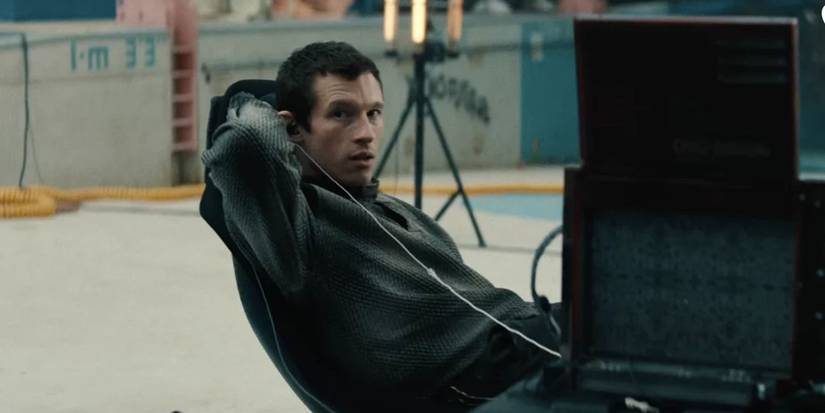 Image via Apple TV