












































Tensions, technology and tariffs are dominating headlines, but another shift just happened that will shape the economic and retail landscape: The consumer got a new CEO.
New CEOs are taking the helm everywhere from Disney to Proctor & Gamble and Coca Cola to Wal-Mart, Target, Dollar General, and Kroger. No common denominator is behind these transitions, but one commonality cuts across: these CEOs are tasked with steering growth through a shaky economy dominated by five shifts.
1. The K is here to stay
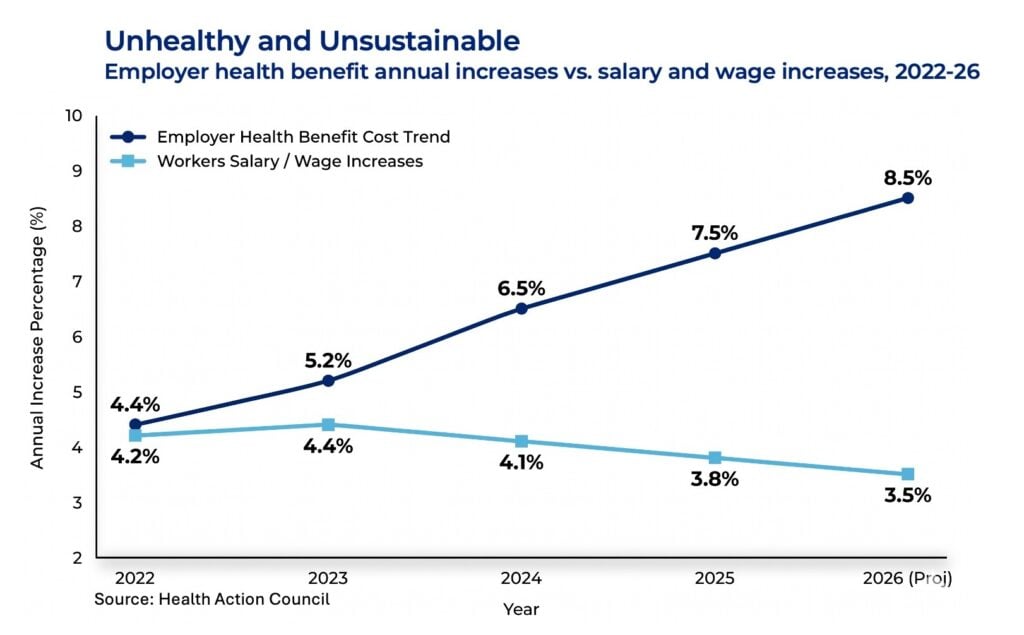
While consumer spending remains relatively robust, headline numbers disguise a nuanced storyline. In the U.S., nearly 50 percent of consumer spending is driven by less than 10 percent of the population, 70 percent of wealth is held by 20 percent of the population, spending and wages are only really rising for the top earners, and credit card debt is increasing (nearly 40 percent of Americans carry a balance).
This K-shaped economy means we have a quickly eroding middle.For an industry that builds innovation on ‘everyman’—the average middle class customer—this presents a challenge.
It’s tempting to view this shift as temporary and wait it out with promotional pricing, tactical shifts or shrinkflation, but the K is here to stay so actioning strategy against it is critical.
Real-time pricing engines that adjust at time of purchase are great, but the choiceful consumer at the bottom of the K is not searching for low price no matter what, they want value: assurance their spend is getting them the offering they want.Searching for value does not mean accepting sameness.Tinkering with existing offerings targeted for ‘everyman’ is flawed strategy: everyman is barely there, and those that are aren’t interested.
The winners will approach the bottom of the K with an innovative mindset finding new jobs to be done, and then designing, promoting, and pricing offerings to meet this.
2. AI is not just their responsibility, it will be their legacy
CEOs have shifted from doubting AI’s reach and relevance to dabbling, to being deliberate about advancing and integrating AI and the agentic workforce. Until recently this meant tasking AI to their technology lead, but lack of CEO ownership can quickly lead to the proliferation of micro use cases but lack of actual impact from AI investments.
CEOs need to go further: AI is not just their responsibility, their ability to shift their organization in a world of AI will shape their legacy.
While AI is a transformational technology, it does not transform the CEO’s role of creating value with a strategy that drives the biggest gap possible between consumer willingness to pay for their offerings and their total cost of delivering that value.Leading with AI does not mean developing an AI strategy; there is no such thing. The role of AI is to enable, support and accelerate value creation.
This means advancing four planks of technology and data foundation; governance and risk management; organizational-wide capability building; and use cases that deliver strategic outcomes. This means going beyond personal productivity and instead reinventing processes and reimagine value creation possibilities.
The temptation is defaulting to linear planning and sequential steps.Each respective leader will argue their plank must be in place before the others. Winners will embrace parallel pathing, which means advancing all four planks while bringing the consumer with them on the journey.Consumers will have temporary patience with AI slop and messy Gen AI solutions, but they will soon tire of big brands being unsophisticated with AI interactions, especially compared to digital natives.
We cannot make linear plans against exponential change: CEOs must drop update meetings with detailed Gant charts and instead engage in collaborative conversations of how they will advance platforms, capabilities, governance, and strategy while engaging with metrics that matter, such as re-purposed time, new markets or offerings opened.
3.Chaos has a cost that they must commit to not paying
Extreme uncertainty feels given, but we’re facing something more disruptive: chaos.When not handled proactively and strategically, the cost of chaos is significant.
New executives wanting to establish themselves quickly fall into the delusion of ignoring shifts around them and ‘sticking to the plan no matter what.’ This determination costs heavily in wasted time, treasure and talent dedicated to the wrong opportunities.
Another trap is the strategic holding pattern or waiting to know more before moving. This paralysis is costly. Wanting to move but not overcommitting can lead to a frenzy, where new leaders throw countless tactics at the market and hope something sticks.
This manifests in ineffective and delayed decision-making, elevated operational costs, loss of confidence from the market, the drain of the most talented employees and a constant focus on the short-term which erodes longer-term shareholder value.
The bad news for these new leaders is they cannot predict what is going to happen next.The good news is they do not have to: Focus should be on making great decisions even though they cannot make great predictions and then prepare their organizations to succeed through a changing environment.This will come from aligning strategic beliefs, identifying and addressing kickers (big upside opportunities) and killers (big downside risks), and executing on no-regret moves, defined as strategic moves that will remain a good idea even if beliefs get challenged.
4. Right to Win matters, but competitive differentiation is harder to maintain
Classic strategy involves asking ‘where to play’ and ‘how to win.’Companies tend to make well-intentioned choices around markets and products of focus, then justify them with generic points around brand and history.
Consumers care little about legacy if offerings are not meeting their distinct jobs to be done.History only translates to advantage when it leads to differentiation that matters. Durability doesn’t resonate if consumers want to switch products frequently.Accessibility matters, but when consumers can consult multiple GPT’s simultaneously, the ability to differentiate with availability is eroding.
Choiceful consumers, a changing landscape and the acceleration of AI are attacking existing advantages, making former differentiation table-stakes. Winning means more than showing up with slightly better offerings: You need a ‘Right to Win.’ This only happens you have things others don’t, can do things that others cannot, or can create moats around your advantage.
Winning companies will have tough conversations regarding actual differentiated advantaged and be prepared to de-resource assets and capabilities and commit to building new ones.
The most promising shot at a Right to Win is not amassing resources or capabilities but instead building ‘irrational loyalty’ with consumers.These powerful moats occur when a value proposition is so strong and differentiated, the thought of not getting it provides so much friction to the consumer they cannot bear it.Loyalty can be built and maintained with work, but historical loyalty cannot be assumed.
If leaders are not honest with themselves at the beginning of their tenure on their Right to Win, the consumer will show them the truth soon, and they may not like the answer.
5. The shopping experience has reset, winning will take a strategic reset
The shopping experience has become increasingly fragmented, complex, digitally enabled and non-linear.Combined with the shifts above means the consumer landscape is shaky. When things are shaky shifts happen. When shifts happen, resets are needed.
The end-to-end consumer experience involves multiple screens, touchpoints and influences than it has before.Capturing mindshare in this world means more than tinkering with existing advertising and media: it requires a reset of the entire relationship with the consumer.
Consumers are starting a buying journey by ‘asking’ a GPT rather than ‘searching’ on google, yet most consumer companies are scratching the surface of what winning conversion means in an ‘ask’ world.Early pilots of agentic shopping are mixed, but the trend towards outsourcing basic goods to agents has started.Influencers are guiding more of the buying journey, and they sway consumer choice. Gen AI has made content creation dramatically faster and cheaper, but winning consumer trust with content remains a challenge.
The consumer has more ability to make choices, and companies need to be ready. The task at hand for the consumer CEO is working with their team to challenge existing assumptions and be prepared to drop those that have expired and re-anchor on what remains.
Emotional ties to the past or the reluctance to change too much at once will hinder the change needed. A growth mandate is a change mandate, and winning in the influenced, agentic, world of ask demands a reset, not a refinement of what used to work.
Uncertainty is a great time to grow
It is tempting to wait to commit until normalcy returns.Returning to anything won’t happen soon for the consumer, so it can’t for the consumer’s CEO.
For the CEOs who grasp these five shifts with a commitment to value creation, there has never been a greater time to grow.
In periods of uncertainty, honesty reigns.Consumers become more transparent about what jobs they need done, and which ones are just nice to have.Test and learns provide more robust feedback, experiments are validated faster, and learner loops are tighter.In uncertainty, the ecosystem is keenly expressing and showing their willingness to pay and the true tradeoffs they are willing to make.
The current environment represents the greatest time to grow, as there has never been a greater learning environment than the current one.
Let’s see which CEOs step up to this opportunity.