









































Marketing personas are fictional — but useful nonetheless. Today, many tools claim to create virtual personas that turn out to be little more than elaborate LLM prompts.
Combining decades of psychological research with real behavioral data could make virtual personas more effective at predicting customer behavior.
Why traditional customer personas still matter
In the 1959 song “Maria” from “The Sound of Music,” lyricist Oscar Hammerstein asks how we “solve a problem like Maria?” It’s an attempt to put the full character of the would-be nun into a few lines.
We get behavioral traits (she waltzes to Mass and hides curlers under her wimple) and attitudinal traits (she’s described as “a flibbertigibbet” and “flighty”). The nuns themselves can’t agree on whether these are good or bad (such as whether she’s a demon or a lamb), but we get a clear picture of the protagonist of the story.
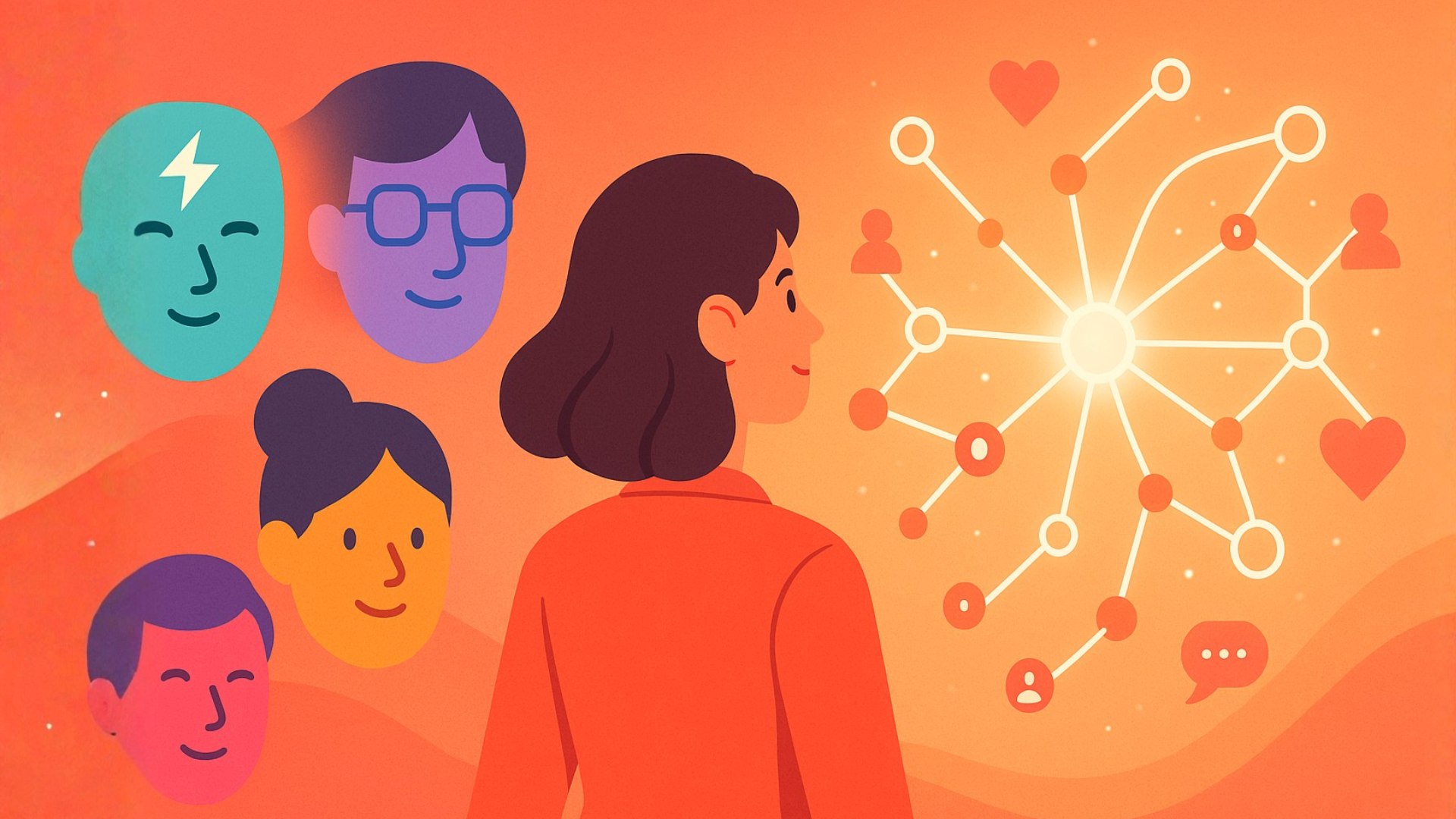
For decades, psychologists, designers, and marketers have tried to distill a person’s whole personality, behaviors, and traits. We’ve all worked with personas — capsule descriptions of a (real or imagined) individual who stands in for a broader group.
Personas help with UI/UX design, understanding product usage and features, and bringing abstract segmentations to life through an individual who typifies the ideal customer or user.
By anthropomorphizing the user, personas help us understand how a real person — who may be nothing like us — buys or uses our products and services. Despite their limitations, they remain an effective tool in our marketing armory. Now we have their shiny new cousins — virtual personas.
10X your SEO with Semrush for Enterprise.
The world’s most powerful SEO platform, purpose-built for Enterprise.
Request demo
How virtual personas work
At their simplest, virtual personas involve putting persona descriptions into an LLM, along with instructions and guardrails, so we can chat with them. We can ask them to describe how they’d react to new situations or decisions they’d make.
This can bring individuals or segments to life and provide deeper insight into their motivations and likely reactions. To experiment, try pasting a description of Maria into a chat session and asking it to speak in her voice. You can use a simple prompt like:
- “Please speak to me in the voice of Maria, as described below. Make your responses short and conversational. Speak as if you were her, not as someone describing her:
”
This fun exercise resembles how virtual personas are often generated today — though with much more specific instructions and guardrails.
Virtual personas like this — populated with in-depth behavioral and attitudinal data from real people — can be vital tools as you explore the depth of your customers and the market.
Like simple personas, they have limitations. We rely on LLMs to fill in the gaps in what we know about the source individuals, which can lead to generalization and stereotyping. This risk grows when we stray from the embedded data.
If you have data for how a specific Gen Z individual views car ownership and brands, and then you ask their virtual persona about pet ownership, the LLM will fill in with what it thinks a member of Gen Z would reply.
How psychological research can improve virtual personas
Psychological research from the last few decades offers a way forward. Rather than a grab bag of behaviors and attitudes, we have data within a specific framework that could let us infer behavior beyond what we’ve observed or measured — that, at least, is the hope.
Researchers debate which frameworks best predict behavior. Consider one commonly cited example — the Big Five personality model. This framework traces its roots in work from the 1930s on the lexical hypothesis, which posited that language would reflect personality differences (an interesting forebear to today’s language models). This model scores individuals on five dimensions — openness, conscientiousness, extraversion, agreeableness, and neuroticism. We might score Maria as:
- Openness – Very high: She daydreams, sings at the wrong moments, and improvises.
- Conscientiousness – Low: She’s late, forgets rules, and comes back missing items. Her heart is in the right place, but her schedule isn’t.
- Extraversion – High: She’s warm and loud, gets energy from people, and wins people over with music.
- Agreeableness – High, with an edge: She’s kind and trusting, but confronts people when she thinks they’re wrong. She’s high on warmth, lower on compliance.
- Neuroticism: low to moderate. She’s mostly resilient and optimistic, but she runs away when her feelings overwhelm her.
A model like this could apply to domains beyond the core data set. If we wanted to know whether Maria would be more likely to sign up for a trekking trip or an all-inclusive resort, the psychological framework gives us far more to work with than a description of her behavior in the convent.
Where virtual personas go next
The process of building personas today is moving toward hybrid descriptions of people that combine actual behaviors, attitudinal statements, and psychological profiles such as the Big Five, as well as more decision-focused models (such as Prospect Theory). There’s also a shift beyond chat toward models designed to predict actual behavior rather than simply describe it.
I often remind people that personas have always been made up, but that hasn’t limited their usefulness. As we use virtual personas and beyond, we have the opportunity to integrate a long history of research and build personas faithful to the humans behind them.