







































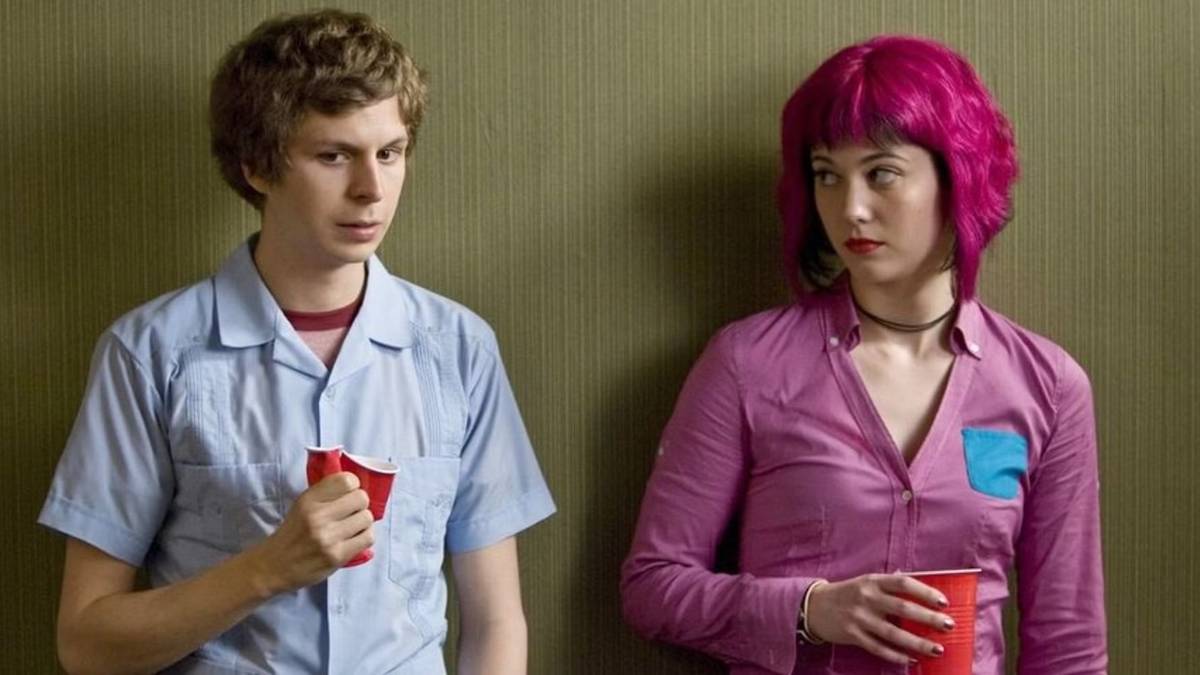
Edgar Wright is a director with an undeniably keen ear. The music in Hot Fuzz and Baby Driver punctuates the movies with clear intent and creative flair, adding a hugely dynamic presence. But Wright’s clear victory in the soundtrack ring is his 2010 cult classic Scott Pilgrim vs. the World. Despite being intensely adored by dedicated fans, the soundtrack still feels criminally underrated in the indie community. It’s a compilation of some incredibly cool tunes that exist outside the film from The Rolling Stones and T.Rex, and it features songs from the fictional band at the core of the story, Sex Bob-Omb. The inclusion of plot-point songs, assisted by ‘90s icon Beck, alter the grasp of Wright’s soundtrack into more of a cinematic artifact than just a soundtrack. Which is exactly why it needs more recognition.
The Icons Included In The Scott Pilgrim vs. the World Soundtrack
The Scott Pilgrim soundtrack comes with some serious credentials. It features classics and alternative names like The Rolling Stones’ “Under My Thumb,” T.Rex’s “Teenage Dream,” and Broken Social Scene’s “Anthems For A Seventeen-Year-Old Girl.” This spectrum maps out a comprehensive blueprint of the alternative scene of the 20th century while landing firmly in the indie home of the 2010s. The inclusion of “Anthems For A Seventeen-Year-Old Girl” is particularly appropriate for Scott Pilgrim, as both the movie and Broken Social Scene take residence in Toronto. Also, it’s a little ode to the character of Knives, the wide-eyed seventeen-year-old in the film who was desperate to be someone she wasn’t, a feeling I’m sure all our younger selves can relate to.
The use of external artists on this soundtrack is more than a curated mixtape but really serves as a reflection of a very specific cultural moment. Yes, it’s the point of soundtracks to do that, but Scott Pilgrim’s works so well because it knows its audience so well. From the ‘60s and ’70s heroes of T.Rex and the Stones to the indie fringes of Black Lips, the soundtrack understands the bedroom-DIY, vintage-obsessed youth of the 2010s. The soundtrack allows them to fit in perfectly with Scott’s gang, inviting them onto the set more than appreciating the film as a spectator.
Sex Bob-Omb And The Spirit Of 2010s DIY Indie
The icons featured on the Scott Pilgrim soundtrack give it credibility, but the remainder truly gives it its soul. I’m sure you’re familiar with the premise of Scott Pilgrim vs. the World, but if not, then it’s worth noting that the involvement of Scott’s band, Sex Bob-Omb, in the battle-of-the-bands competitions drives the plot. The music of Sex Bob-Omb perfectly echoes Scott’s insecurities, anxieties, and ambitions, making it pivotal to the plot. The fictional band of Sex Bob-Omb is legitimately good and would definitely work outside the movie. It does help that Beck played a huge part in the writing of the music for Sex Bob-Omb, writing pretty much all the songs performed by the actors. And you can tell. The music has his signature distortion-driven garage sound, with loose harmonies and a basement punk energy.
Beck’s involvement validates the music of Sex Bom-Omb and qualifies it to be an ironic parody of the indie scene itself. Tracks like the self-deprecating “Garbage Truck” and the hilariously short “I’m So Sad, So Very, Very Sad” earnestly satirize the indie culture of the time, but with music that genuinely slaps. Beck actually recorded his own version on the deluxe edition of the soundtrack, showing he’s not only a good sport, but that the music is worth making a version of. It only further cements the legitimacy of Sex Bob-Omb. The music of the fictional band being included in the soundtrack makes the characters truly believable. It takes them off the screen into a world that exists alongside The Rolling Stones, somewhere between our world and theirs. It gives them firm ground as a serious act, and it actually ends up transcending parody.
Fifteen years later, Scott Pilgrim Vs The World is a recognized cult classic, as it should be. But the soundtrack still needs a little more love. Its zany blend of the real and fictional gives it a cultural longevity that other soundtracks don’t have, simply by pumping the characters into its being. Their presence on the album gives a sense of chaos that truly reflects the film, and in listening to it, you’re placed right there in Toronto with them, and they’re with you wherever you might be. It’s genius. While Scott Pilgrim completely embodies that indie time period, it still resonates today, even if just as a time capsule. It blends satire and sincerity in that wonderfully indie way, and I promise that the soundtrack alone is worth revisiting.