










































The close of 2024 was marked by deep ambiguity—geopolitical tensions, uneven economicsignalsand anticipation of anew administration coming into the White House. With so much in flux, CEOs entered 2025 preparing for a year definedlargely by“wait and see.”Strategic plans were conservative; spending wasselectiveand few felt confident in their ability to forecast what was coming.
But as wenearthe end of 2025, there is finally some clarity after a turbulent and often surprising year.Thatgives us a chance to revisit the forecasts CEOs made last Decemberabout a handfulof critical indicators—from interest rates and inflation to the Dow and the political landscape.
Now, continuing our annual tradition,we’relooking back to see just how accurately CEOs predicted the future. The verdict?Let’sjust say that this was a difficult year to predict.Hopefully, the predictions for 2026 will fare better.
The Stock Market:HalfCorrect!
Whenaskedin December 2024to forecastwherethe Dow Jones Industrial Average wouldbe in December2025,52percentof CEOs we polled saidbetween45,000 and50,000, which would bejust slightly up from the average closing value of around 44,000 in December of 2024.Awhopping 23percent said itwouldremain unchangedtobetween40,000 and45,000.Only17percentforecastedthe Dow to rally above 50,000, so the majority here were on the moneywith the average sitting around 47,000 this month.

Wealsoaskedfor forecastsofthe S&P 500 last year, and those were lessaccurate. Only 27 percent of CEOs correctly predicted that the S&P 500 would end the year over 6,500 which was markedly up from the 6,000 it was hovering at duringDecember2024. Over one-third expected that the S&P 500 would close the year between 6,250 and 6,500, whichisrelatively close,but still an underestimation.

When it comes to predictingthe stock market in 2026, the majority of CEOs do not foresee muchmovement.Almost atthe same margin as 2025, 53 percent of CEOs predict that the Dow Jones Industrial Average will be 45,000 to 50,000 by this time next year, within its current range.

As for the S&P 500, the CEOs do not forecast much movement. The most popular guess for the S&P 500 value one year from now is between 6,750 and 7,000, againwithin its current range. However,half of allCEOs forecast that the S&P 500 will climb in value by the end of next year, compared to only20 percent who expect a decrease.

Bitcoin: Pretty Close.
Now that bitcoin has pushed its way into the mainstreamwith the help of the current administration, we decided to track CEO predictions for its value.In December 2024 Bitcoin finally surpassed the magic $100,000 level just as CEOs were asked to predict where it will go from here. More than a third of CEOs expectedit to hover between $90,000 and $110,000;37 percent predictedthe valuewillmove above current levels;and 30 percent expecteda drop.The14percent that predicted the value to be between $75,000 and $90,000 were correct, with its current value sitting around $90,000. But who knows?By the time this ispublished,it could rally—or drop—once again.

For bitcoin’s value in 2026,equal proportions of CEOs (34 percent each) expect the value to either drop slightly to between $75,000 and$90,000, orclimb slightly tobetween $90,000 and $110,000.Andalmostequal proportions expect it to rally further above $110,000 (at 15 percent) or drop below $75,000 (at 16 percent).

Inflation: Correct!(Again.)
CEOshad the right idea with their predictions about inflation once again in 2025 (they havea pretty goodrecord).The most popular response was that inflation would be between 2.5 and 3 percent, selected by 37 percent of the CEOs polled.And the most recent figures show inflation at 3.01 percentso,the 27 percent that predicted inflation above 3 percent might have a winner’s stake as well.

Where will inflation be at the end of2026?CEOs aresplit:40 percent believe that it will remain within the same range that it is nowat 2.5 to 3 percent, while 38 percent of CEOs expect inflation to climb above 3 percent next year. This is 10percentage pointshigher than thefraction that forecast inflation above 3 percent last December, when inflation was hovering around 2.9 percent.

Interest Rates:Overestimated.
Some59percent ofCEOssaid that by December 2025, thefedfundsrate would beover 4 percent—about the samelevels as2024.For the majority of2025,the 43percent of CEOs who predicted rates between 4 and 5 percent would be correct.However, the late October rate cuts marked the first time thefed funds rate fell below 4 percent since 2022. AsubsequentDecember rate cut brought the target down by 0.25,meaningonly 35 percent of CEOs predicted this one correctly. Good luck next year.

There seems to be a patternemergingwith CEOs’ predictions for 2026: They do not forecast much change.When asked where the Fed would set interest rates,two-thirds of CEOs donotseerates coming down below 3 percent for another year, at least. Only 19 percent predict rates below 3percentby year-end 2026, while14 percent predict another rate hike.

Russia/Ukraine:Incorrect,Sadly.
In thefourthyear of asking this question,the war inUkrainesadly continues.In 2024, 65 percent of CEOs predicteda brokered halt to the war bythe end of 2025vs. only 17 percent who forecasted the same in 2023. A quarter of CEOs forecasteda continued slogand unfortunately, no deal has been reached yet.

Results for predictions about the war in Ukraine have completely flippedfromone year ago.Now the majority of CEOs (55 percent) predict continued fighting, whileonly39 percentforecast a brokered halt, down 40 percent since last year.

Trump And Musk:Mostly Incorrect!
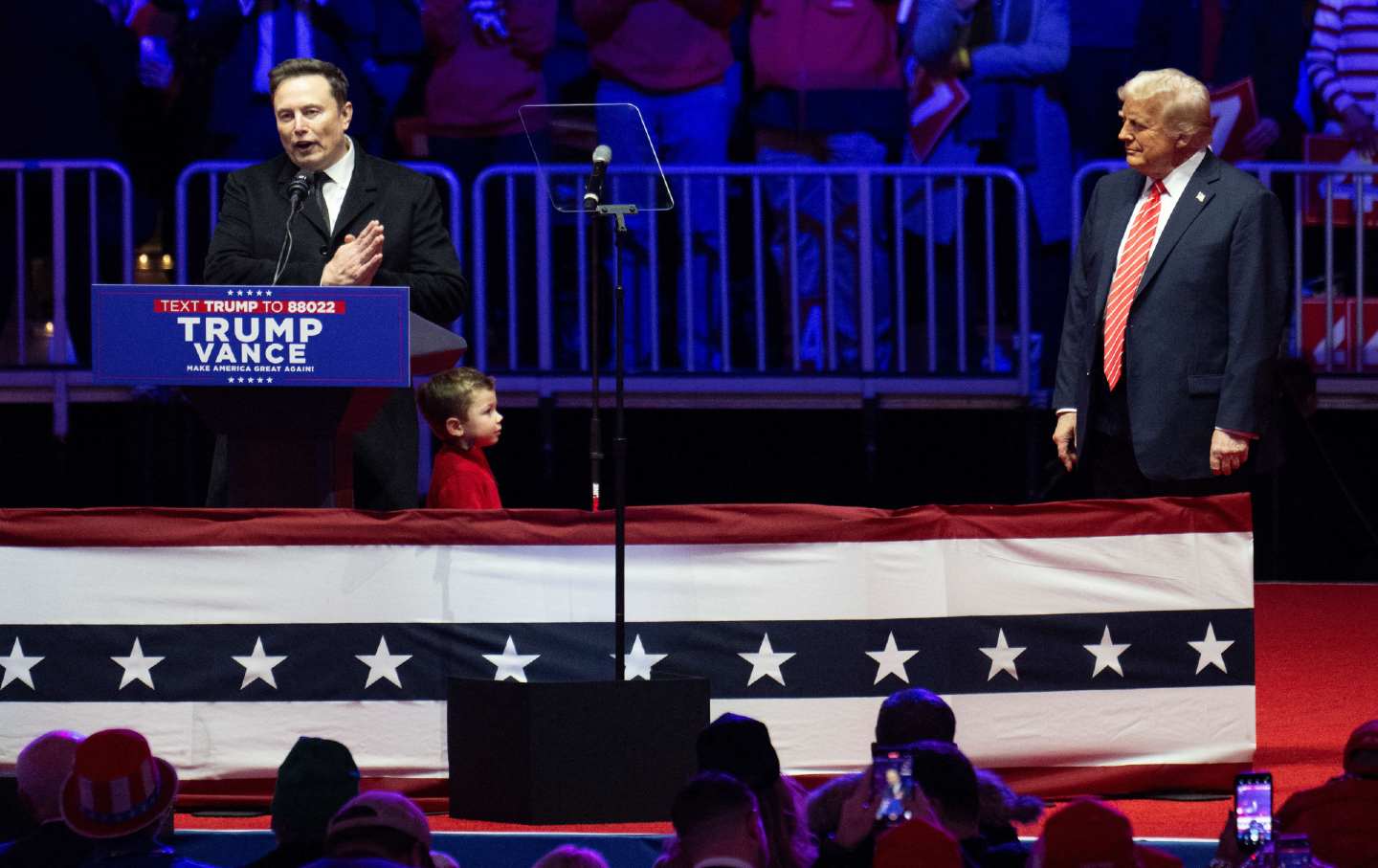
An unlikely duoemergedin the fall of 2024 as DonaldTrumpsecured the presidential election with Elon Musk by his side.When we askedCEOsto predict the course of their relationship, they weresplitalmost exactlydown the middle.In this case, the minority was correct, with46 percentwhoexpectedMusk to get the boot or leave of his own volition bynow.(For the record,Muskdidn’tmakeitsix months.)

The 2026 Midterm Elections: Prediction
Now thattheTrump-Muskrelationship isout of the news, we can shift our attention to the 2026 midterm elections.For next year, 59 percent of CEOs predict Democrats willemergevictorious, while 41 percentpredict Republican control of the House.While not as split as their forecasts on the Trump-Musk relationship, there is still afairly starksplit where it could be anyone’s game.


About the CEO Confidence Index
The CEO Confidence Index is America’s largest monthly survey of chief executives. Each month, Chief Executive surveys CEOs across America, at organizations of all types and sizes, to compile our CEO Confidence Index data. The Index tracks confidence in current and future business environments, based on CEOs’ observations of various economic and business components. Foradditionalinformation about the Index and prior months data, visitChiefExecutive.net/category/CEO-Confidence-Index/