

















































As part of your New Year preparations, it’s worth taking a moment to consider how the online landscape is changing, and as a result, which aspects of digital marketing will have the biggest impact in 2026.
Because digital connection is now the most prominent form of interactivity, and the key way that people get information, on everything. Where once TV was king, now, people spend more time in social apps, and as behaviors shift, that also changes how you should go about reaching your target audience.
With this in mind, we’ve put together an overview of three key elements of focus.
Those key elements are:
These are the three elements that are going to sway the social media and digital marketing landscape the most in 2026, and if you can get them right, you’ll be best placed to get the most out of your efforts.
The first post in the series looked at AI, and whether you need to have AI within your digital marketing toolkit, while the second looked at algorithmic amplification, and the investigations underway into changing why we are shown certain posts (or not) in social apps.
This final post looks at augmented reality, which is set to become a much bigger factor in 2026.
The AR Shift
You may still be unconvinced that AR and VR will be the next major shifts in digital connection, and Meta’s apparent backtracking on its “metaverse” ambitions would suggest that enthusiasm for such isn’t at the levels that some had anticipated as yet.
But looking at historical technological and engagement trends, it seems inevitable that both technologies are set to have a transformative impact, one way or another, and that users will align with the best connection options available to them, as they become more widespread.
For example, looking at the rise of social media, the initial seeds of social platforms sprouted from SMS, and the capacity to send text messages, in variance to making a phone call. That then became broadcast text messages, via MySpace, then Facebook, which then morphed into mostly image sharing, as connective capacity increased, and it became more affordable and viable to send images.
Which then morphed into full video clips that people can view on the go, and that’s now become the current landscape, where a never-ending stream of short-form video clips is most likely to be holding your attention. Eventually, people will gravitate towards the most advanced connective medium that they can access, in order to better share their experiences, and participate in culture.
Which is where AR comes in. Augmented reality overlays your field of vision with digital elements, which can enhance, and even totally alter your real-world scenes, via an interactive interface.
The challenge lies in how well AR devices can read the scene before them, and translate what you’re seeing into actionable, valuable additions that will justify spending on these devices.
Snapchat went early with its AR ambitions, as it sought to extend the engagement benefits of its interactive Lenses into its own AR glasses, with the first version of its Spectacles launched in 2016.

Snap followed that up with “World Lenses,” or wholly immersive AR overlays, that would be able to respond to a broader range of real-world elements, and create even more engaging experiences. Logically, that pointed to Snap’s Spectacles integrating these digital overlays onto people’s view through the device, but development challenges slowed Snap’s momentum, and forced it back to the drawing board for a more viable AR glasses approach.
Since then, it’s Meta that’s taken the lead. Meta’s been developing its own AR glasses since around 2018, shortly after Snap’s first attempt, with Meta’s team putting specific focus on affordability as a means to drive maximum take-up.
In 2020, Meta previewed its first “Project Aria” AR glasses, and detailed its plans to launch the device to consumers in 2027.
It’s since provided a lot more detail on the device, and has now launched its Display smart glasses, which includes Meta’s neural band wrist controller, that will eventually also enable users to interact with AR elements.
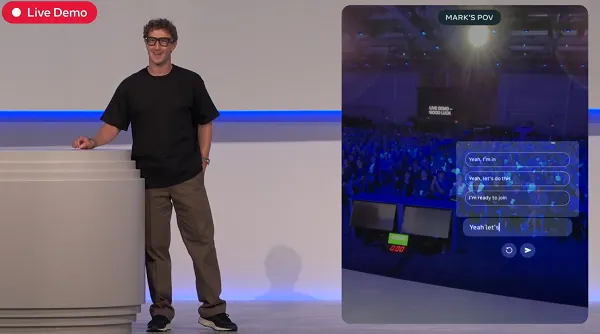
At the same time, Snapchat has continued to develop its own AR glasses, which it’s now calling “Specs,” and in order to beat Meta to the punch, it’s planning to launch its AR Specs to consumers this year.


That launch is why 2026 will be a watershed moment for AR devices, marking the next major shift in digital connection.
Though that’s not because Snapchat’s Specs are going to see massive take-up (I anticipate that Specs will struggle to compete with Meta’s popular AI glasses right off the bat, even with full AR capacity).
No, the expedited launch of Specs, which will prompt more attention for AR, will also prompt Meta to hasten its own AR announcements and launches, in order to ensure that Snapchat can’t get a major first-mover advantage, and become synonymous with AR, like ChatGPT has done with AI.
Because really, Meta could have released a ChatGPT like app years before OpenAI did it. Meta has been developing machine learning systems for over a decade, and had it thought of it, it could have repackaged this as “AI” and beat OpenAI to market.
But it didn’t, and now, all of these new AI tools (which aren’t really artificial intelligence) are trying to beat ChatGPT as the key entry point for the technology.
Meta learned this, and it’s unlikely to let Snap steal its thunder on AR, even with a subpar device.
And Snapchat’s device is inferior to Meta’s planned AR glasses, on every front. Meta’s current Orion model weighs less, has a longer battery life, has a wider field of vision, and given Meta’s market power, will likely end up being cheaper than Snap’s Specs, once Meta launches.
Meta’s current AI glasses are also selling so well that it can’t meet demand, so on balance, Meta has all the reason in the world to believe that it’s going to eventually beat out Snap, and really, anybody else, as the leader in AR wearables.
But Snap launching AR Specs early is a risk, and as such, I anticipate that Meta will be looking to ramp up its AR-related launches and announcements, which will boost excitement about AR as the next connective platform.
Which is why AR will become a bigger consideration for your business in 2026.
Does that mean that you’ll have to be building your own AR worlds straight away?
Well, no, but with AR builder tools becoming much easier to use, assisted by AI tech, I would advise social media managers to start experimenting with creation platforms, like Meta’s AR and VR builder tools (note: Meta’s Spark AR platform is shutting down this month). The more you can learn about this, the better placed you’ll be to capitalize on AR tech when it becomes a bigger shift, as more people look to buy AI, AR and VR devices to link into these experiences.
And again, people are already buying Meta’s latest AI glasses models in much higher numbers, with the lure of having an AI assistant on hand at all times, as well as hands-free calls and messaging, auto translation, etc.
As these tools become more practical, AR overlays will become a natural evolution, and if Meta can ensure it keeps the price point low enough to seed mass adoption, this will indeed become the next big shift, as Mark Zuckerberg envisions.
Basically, 2026 is going to be the year that we all see the potential of true AR experiences, and we get a real glimpse as to how this will become a valuable, viable addition, that can bring various additional functionalities to our day-to-day experience.
Snap will force other developers to move on this, and even if Meta’s Orion glasses aren’t launched for another year, we’re going to have a much better idea of their practical value by the end of 2026.





![8 Visual Trends to Consider for Your Marketing in 2024 [Infographic]](https://www.socialmediatoday.com/imgproxy/5D-vCabJJr7zsY982O0s8-lgC90bpTTxyBX8_DR9Ryc/g:ce/rs:fill:700:3830:0/bG9jYWw6Ly8vZGl2ZWltYWdlL3Bpa3RvY2hhcnRfZGVzaWduX3RyZW5kczEucG5n.jpg "8 Visual Trends to Consider for Your Marketing in 2024 [Infographic]")
