

















![ENHYPEN’s ‘[WALK THE LINE SUMMER EDITION] IN CINEMAS’ Concert Film Sets March Release Date](https://charts-static.billboard.com/img/2020/12/enhypen-z2c-344x344.jpg "ENHYPEN’s ‘[WALK THE LINE SUMMER EDITION] IN CINEMAS’ Concert Film Sets March Release Date")



















July 8, 2025
Paramount’s settlement with Trump is a symptom of deep structural rot in our corporate media system.
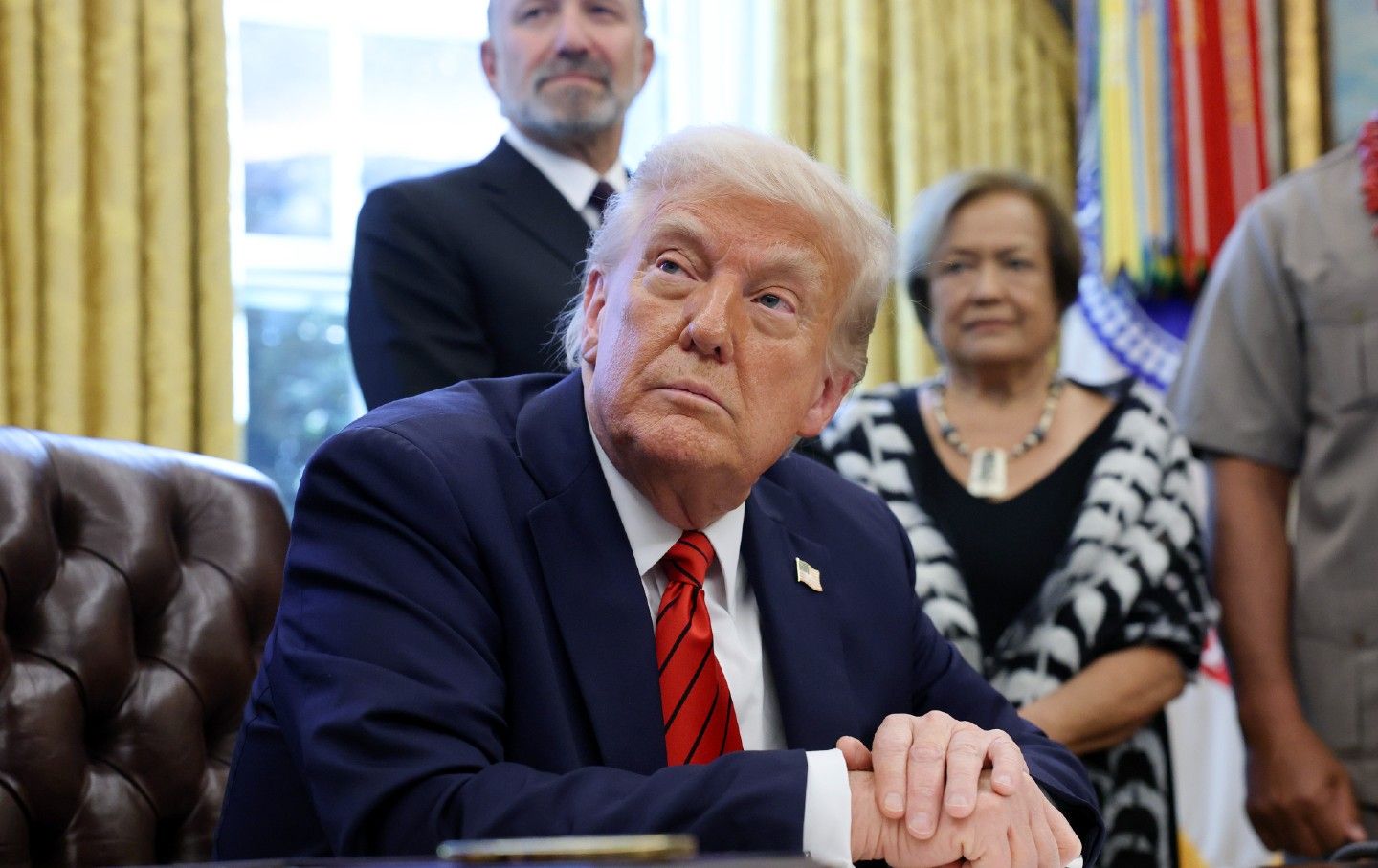
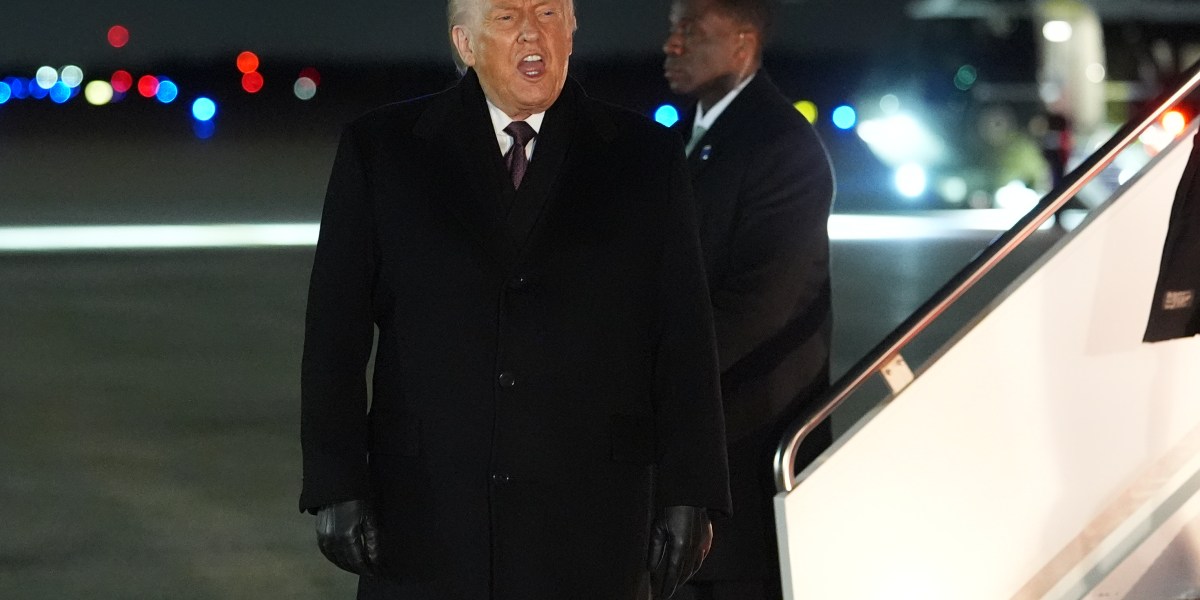
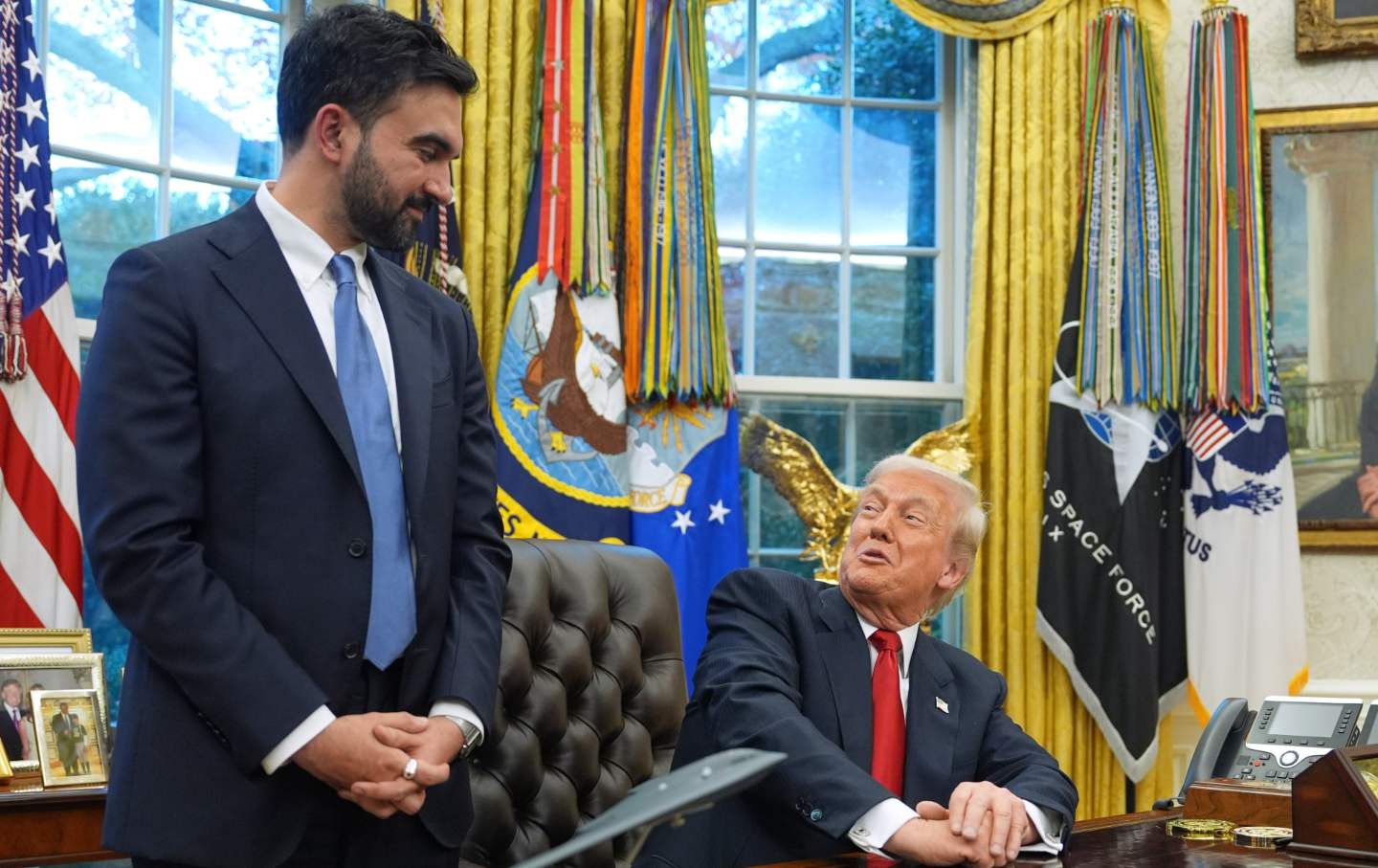
Paramount’s $16 million settlement with Donald Trump is a stunning display of bribery, greed, and cowardice. It’s also a symptom of deep structural rot in our media today—a system in which profit trumps democracy at every turn.
To review: Last October, Trump sued Paramount, the parent company of CBS News. Trump alleged that the CBS program 60 Minutes deceptively edited an interview with Vice President Kamala Harris to “tip the scales in favor of the Democratic Party” in the lead-up to the presidential election. From the beginning, nearly all legal experts determined that the case was utterly meritless. Media organizations are, after all, protected by the First Amendment, and are legally and ethically permitted to make routine edits of interviews they air.
Current Issue
Nonetheless,Shari Redstone,Paramount’s controlling shareholder, is seeking to secure regulatoryapproval for the multibillion-dollar sale of the media conglomerate totheHollywood studio Skydance. Redstonehas seemedeagerto settlethe casewith Trump and orchestrate the merger,democracybe damned.As Senator Bernie Sanders aptlyput it, “the Redstone family diminished the freedom of the press today in exchange for a $2.4 billion payday.”
Ever sincethe lawsuit was filed, numerousjournalistsand Democratic policymakershave spoken out against this egregious move—lambasting both Trump’s laughable charges andRedstone’slack of principleinfailing tocontest them.
Trump’s frivolous bullying shouldn’t have been granted a moment’s legitimacy. And yet here we are.
Trump’s legal chicanery continues his close adherence to Hungarian Prime Minister Viktor Orbán’s authoritarian playbook for undermining the free press: manipulate media law, threaten news companies’ profits, and exploit oligopolistic media ownership structures. In short, weaponize any tool at his disposal to beat media institutions into submission so that everything looks and sounds like Fox News.
This controversy also casts light on the dangerous stranglehold that media conglomerates wield over journalism. Every tentacle of their vast holdings creates yet more conflicts of interest and potential for privileging business interests over our democratic needs. From the craven capitulation of ABC and now CBS, to the fascistic discourse on X and Fox News, we’re witnessing corporate power over our media run amok, depriving society of a major check against authoritarianism. We should all be alarmed.
And yet we shouldn’t be surprised. In the face of government strong-arming, profit-seeking media organizations predictably sacrifice their journalistic principles rather than jeopardize their commercial interests. And while individual journalists might speak out here and there, America’s major news media repeatedly folds and fails us. In so doing, it helps weaken public accountability as well as society’s First Amendment protections.
What’s to be done? Senator Elizabeth Warren is calling for a bribery investigation and promises to introduce legislation that will “rein in corruption through presidential library donations.” Senator Ron Wyden vowed that he’d be “first in line calling for federal charges” once Democrats retake power. More immediately, Wyden is encouraging state prosecutors to “make the corporate execs who sold out our democracy answer in court.”
These worthwhile initiatives notwithstanding, we need even more ambitious reforms. Corporate media institutions are a key part of the pathologies afflicting our society today. This latest attack on the press and its foreseeable surrender is exhibit A for why an oligarchic profit-driven media system is bad for democracy. These kinds of press failures are typically narrated as the misdeeds of unscrupulous individuals. But they’re the result of structural features that can’t be understood simply as a “bad apples” allegory.
In other words, Paramount’s capitulation to Trump points to a systemic problem in need of a systemic fix. Meaningful public-interest protections would be a step in the right direction, but instead of putting regulatory Band-Aids on festering wounds, we should work toward building a new media system based on a different logic altogether. While caving to Trump’s extortion is inexcusable, the incentive structures—including legal obligations—currently in place encourage media owners to ignore democratic duties to society. Profit imperatives—to shareholders, investors, advertisers, and themselves—drive media owners to treat news and information as commodities, not essential public services, and audiences as consumers rather than as engaged citizens.
We must unveil and confront these logics to understand the toxic synergies between a hyper-capitalistic, concentrated media system and fascistic tendencies under an autocratic regime. Seeing unmitigated commercialism as the core root of the problem shifts our strategic frame from trying to shame media owners into better behavior to mandating that our news media must serve democracy for us all, not the profits of a privileged few.
Popular
“swipe left below to view more authors”Swipe →
As I’ve argued before, a revitalized public media system must remain fixed on our long-term political horizon. Such a system must be public in more than name only: It must actually be owned and controlled by the communities that media outlets serve. Such a decentralized, federally guaranteed but locally governed, infrastructure could better withstand the types of government capture that are increasingly pronounced in our commercial media. While this would look different from our current public media system, it could potentially use that infrastructure as its initial building blocks.
For the immediate future, we must do all that we can to push back against the further Trumpification of our media. This includes supporting nonprofit and independent media in any way possible, especially given the ongoing collapse of local journalism. But for the longer term, we must set our sights on structural media reform that goes far beyond defending the status quo, chastening corporate media owners, and preventing the fascistic drift of the current media oligarchy. We need to both de-commercialize and radically democratize our media from root to branch.
If there’s any silver lining to Trump’s ongoing corruption of our media landscape, it’s that he’s exposing how paper-thin the commercial media’s commitment to journalism actually is, as well as how poorly equipped it is to safeguard the vestiges of American democracy. As Trump lays waste to what’s left of our media’s integrity, we should begin planning to rebuild journalism from the ground up, daring to imagine how we might create a truly democratic media system out of the wreckage.

More from The Nation
The rule of law presupposes that there are rules that provide a consistent, repeatable, and knowable set of outcomes. That’s no longer the case.
With Trump’s popularity in freefall, 2026 should be a gimme for the opposition. But there are signs that the Dems could sleepwalk into disaster.
Trump’s bizarre claim that he fell out with the indicted child sex trafficker because Epstein “stole” workers from Mar-a-Lago only raises more lurid questions.
The doom-obsessed Democratic Party remains as unpopular as ever—but there is another path.