




















































Most filmmakers today rely on delivering a big, last-minute twist that takes the story to a whole new level. And there’s no denying that the approach has worked for several blockbusters. However, this formula of saving everything for the last five minutes and hoping that the audience will forget the slow burn that came before it is getting a little old. Everyone loves a jaw-dropping final reveal, but the best films know that the key to success is to keep twisting.
Great thrillers operate on the principle that tension must be sustained, so the audience has no reason to look away. Classic bait-and-switch that doesn’t serve as a gimmick, but as a storytelling tool that works to deepen the narrative. Here is a list of seven thrillers that do exactly that and are packed with plot twists that keep the viewers wanting more.
1
‘The Invisible Guest’ (2016)

The Invisible Guest is a film that wastes no time placing the audience right in the middle of absolute chaos. The story follows businessman Adrián Doria (Mario Casas) after he is accused of murdering his lover in what looks like an impossible crime, with only a few hours to build his defense. As Doria recounts the events leading up to the crime, the narrative quickly turns into a series of conflicting versions of the truth where nothing is really as it seems. The film thrives on its unique structure, where every piece of information casts doubt on whatever came before it.
Every time the audience feels like they’ve pieced things together, the story shifts, and they are pulled right back into uncertainty. The twists don’t come as sudden shocks, but quiet realizations of how carefully the protagonist has been constructing his reality. The Invisible Guest is essentially just one long conversation, but it never feels static because of how everything can change in the blink of an eye. By the time everything finally falls into place, the audience is already itching to rewatch the whole thing and analyze everything with a completely different perspective.

2
‘Fight Club’ (1999)

Fight Club is a masterpiece that completely rewired Hollywood despite not performing well at the box office. The film, directed by David Fincher, follows Edward Norton as an unnamed narrator who is an insomniac office worker trapped in a life that feels increasingly hollow. However, that changes when he crosses paths with charismatic soap salesman Tyler Durden (Brad Pitt), who lives by a radically different philosophy. Their strange friendship quickly takes a turn as the two start an underground fight club where men seek meaning through pain and rebel against a system where they are reduced to cogs in a machine.
Soon enough, though, the club starts growing into something far more dangerous, and the introduction of Project Mayhem transforms this personal rebellion into full-blown organized violence. What’s even more unsettling is how the narrator’s perspective becomes increasingly unreliable, and the film starts blurring the line between reality and fantasy. Fight Club is a masterclass in storytelling, especially with how meticulously it builds toward the final reveal. The film doesn’t rely on last-minute shocks because it carefully weaves its plot twists into the story from the very beginning. Beneath all this, though, Fight Club is a sharp critique of masculinity, which is why it still feels relevant over two decades later.
3
‘The Sixth Sense’ (1999)

Some films use plot twists for shock value, but The Sixth Sense uses them with purpose and intention like no other. The film is one of M. Night Shyamalan’s most influential works and explores a kind of horror that feels disturbingly real to the audience. The story follows child psychologist Malcolm Crowe (Bruce Willis), who takes on a troubled young patient, Cole Sear (Haley Joel Osment), a boy who claims he can see dead people. Malcolm approaches the situation as a case study in trauma, but slowly, Cole’s fears start to feel disturbingly real.
The dynamic between the two characters is the heart of the story and grounds the film in something deeply human while leaning into the supernatural. Cole’s encounters with spirits become increasingly unsettling, but Malcom encourages him to listen to them instead of resisting, and that completely reshapes the young boy’s understanding of his own ability. The plot twists in The Sixth Sense hold real, emotional meaning. Every little twist is building toward Cole’s eventual transformation, and this deliberate framing elevates the film from a straightforward psychological thriller to something that feels far more intimate.
4
‘The Game’ (1997)
.jpeg?q=70&fit=crop&w=825&dpr=1)
The Game, directed by Fincher, is best described as a ruthless mind trick that takes its audience for a ride that just gets wilder. The film follows a wealthy investment banker, Nicholas Van Orton (Michael Douglas), who receives an unusual birthday gift from his estranged brother. He is invited to participate in a game that promises to change his life. At first, the whole thing feels like an elaborate prank, but soon enough, Nicholas begins to experience strange interruptions and coincidences that throw him into a constant state of paranoia. The protagonist and the audience are never quite sure of what is real and what is just part of the game, and this is where the film’s sense of tension comes from.
The Game escalates in a way that feels both methodical and overwhelming. Slowly, Nicholas is stripped of everything and everyone he once relied on because the game works on dismantling the very identity he built his life around. The twists here aren’t just narrative surprises. Instead, they serve as steps in breaking the protagonist down and forcing him into desperate situations. The Game is an immersive experience that invites the audience to actively experience how scary it feels to lose control. That’s exactly why it continues to outshine most modern thrillers even now.
5
‘The Handmaiden’ (2016)

The Handmaiden is not for the weak, but every second of the film is a masterclass in control and deception. The story is set in Japanese-occupied Korea and follows young pickpocket, Sook-hee (Kim Tae-ri), as she is hired to serve as a handmaiden to the secluded heiress, Lady Hideo (Kim Min-hee), as part of an elaborate scheme to steal her fortune. At first, the narrative unfolds like a typical thriller as Sook-hee carries out her duties. However, the deeper she is pulled into Hideo’s world, the more unstable the plan becomes. The story unfolds in three parts, and the film keeps revisiting key events from different perspectives to reveal new motives, hidden dynamics, and secrets that completely reframe everything the audience thought they knew.
This structure drives the story forward and forces the viewer to keep reassessing every little detail. The film’s plot twists are closely tied to its themes of performance and identity. The characters are constantly deceiving each other, but in doing so, they are actively constructing roles depending on whatever the situation demands. The Handmaiden’s visual aesthetic mirrors this narrative through mirrors and obstructed views. This is a film that keeps rewriting its own reality and demands the viewer’s full attention to drive the point home. By the end, the twists and turns start feeling inevitable rather than shocking, but that’s the entire point.
6
‘Gone Girl’ (2014)

Image via 20th Century Studios
Another Fincher masterpiece on the list is Gone Girl. The film begins with a familiar missing-person mystery, but quickly takes a much more disturbing turn. The story follows Nick Dunne (Ben Affleck), who becomes the prime suspect when his wife Amy (Rosamund Pike) suddenly disappears on their anniversary. The whole thing turns into a media spectacle where the public has already decided that Nick is guilty. The narrative follows the events leading up to the disappearance through alternating timelines and Amy’s diary entries. Everything the audience sees paints the picture of a marriage that has slowly fallen apart.
It all makes perfect sense until Fincher shifts the perspective, and Amy’s perfectly constructed story begins to fall apart. Most thrillers save the big twist for the climax, but Gone Girl reveals Amy’s elaborate scheme halfway through. That shifts the story from a simple whodunit mystery to an intense psychological battle between two people. Gone Girl is the definition of a postmodern thriller, where the plot isn’t essentially leading to a resolution. The film keeps layering twists throughout its runtime and constantly keeps the audience on their toes. Nothing is ever as it seems in Gone Girl, and that uncertainty is the film’s driving force.
7
‘The Prestige’ (2006)

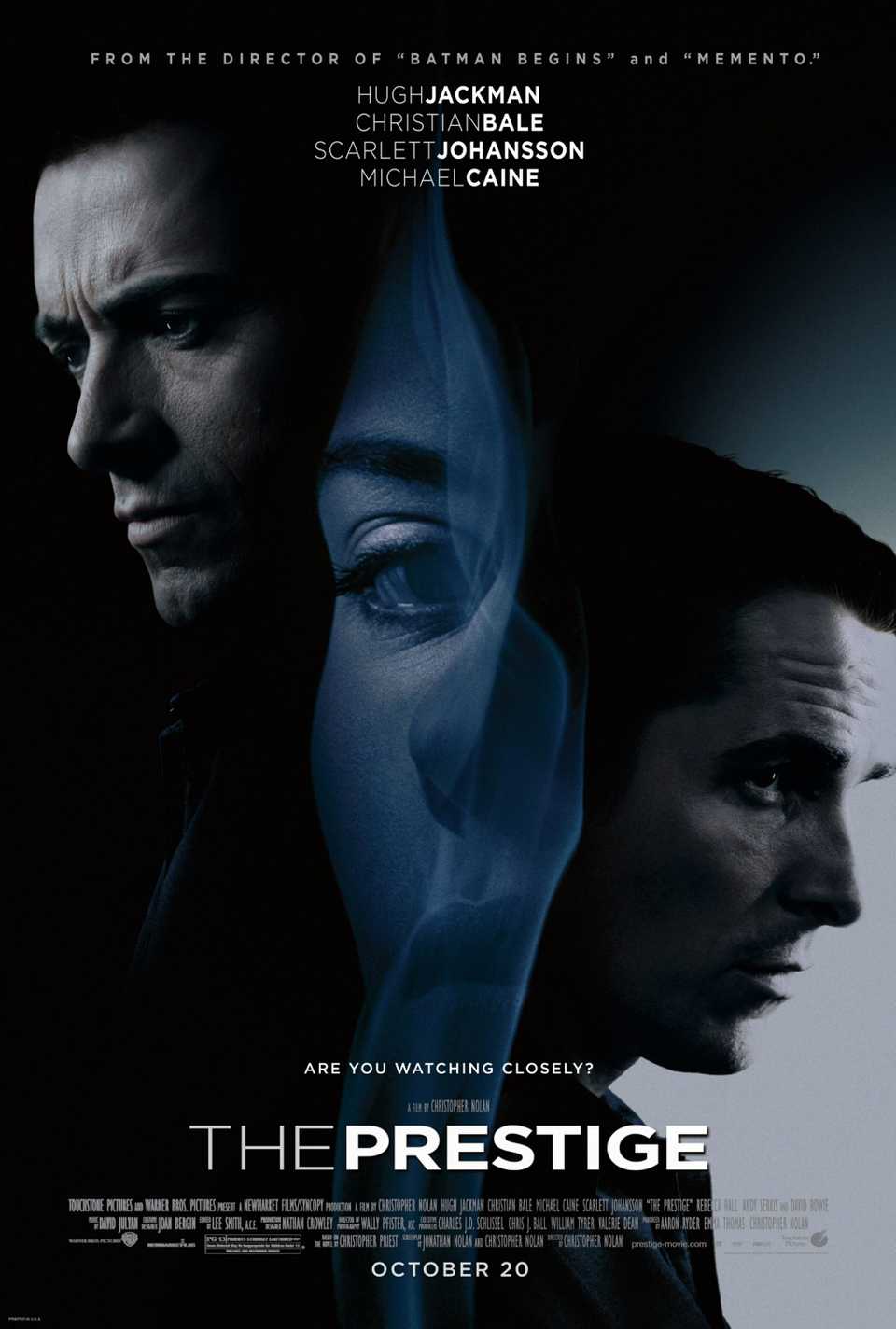
The Prestige is Christopher Nolan at his absolute best. The film mirrors the structure of a magic trick and rewards the audience for paying attention every step of the way. The story follows rival magicians Alfred Borden (Christian Bale) and Robert Angier (Hugh Jackman), whose professional competition slowly spirals into a dangerous obsession where they will go to any lengths to outdo each other. The plot unfolds through a fragmented, non-linear structure. This constant shifting between times, perspectives, and even unreliable narrators makes it almost impossible to grasp what is real and what isn’t.
The film actively works to misdirect the audience and presents things as true, only to later pull the rug from under them. The twists in the film aren’t confined to just a single moment, but are a continuous part of the story. Each revelation adds more context to the narrative and pushes the characters into unsettling territory. The Prestige doesn’t just tell a story about illusion — it embodies the illusion — and that creates a viewing experience like no other.