







































The internet has always known how to push our buttons, but in 2025, those buttons became big business. The scrolling never stops, the takes keep getting hotter, and the comment sections feel more like battlegrounds than conversations. Now, Oxford University Press has given a name to the emotional quicksand we keep stepping into: rage bait, officially declared the Oxford Word of the Year 2025.
It’s a term many of us felt long before we learned it. That prickling irritation when a video, headline, or tweet is clearly designed to provoke you into reacting, even on the days you promised yourself you’d simply mind your business. Usage of the term surged more than 300% this year. And its coronation doesn’t feel like a celebration; it feels like a diagnosis.
Yet the most revealing part of this announcement isn’t the winning phrase itself. It’s what the rise of rage bait says about how we navigate connection, conflict, identity, and truth in a world where outrage has become currency.
The Anatomy of Rage Bait And Why We Keep Falling for It
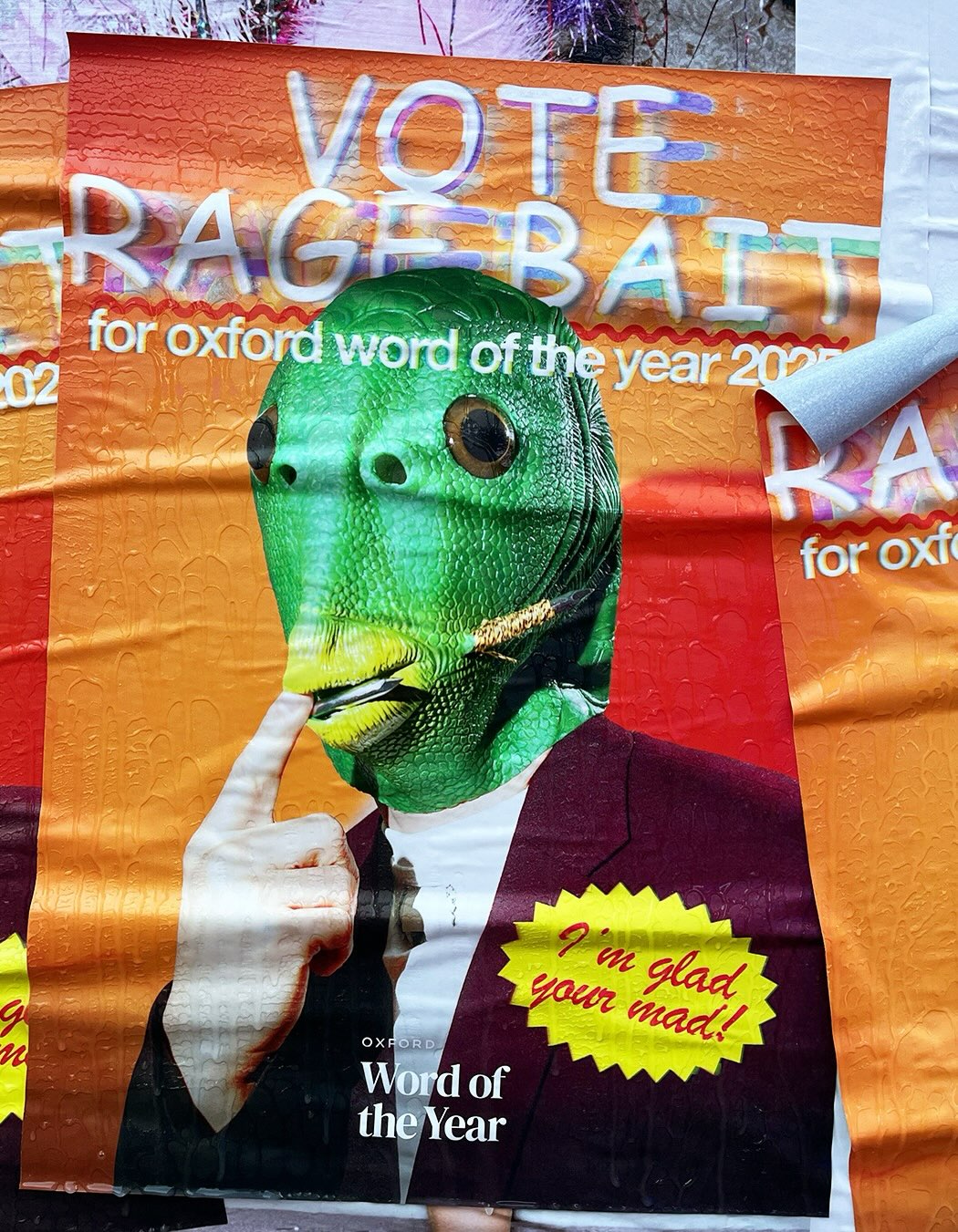
Oxford University Press defines rage bait as content “deliberately designed to elicit anger or outrage by being frustrating, provocative, or offensive.” Unlike clickbait, which preys on curiosity, rage bait targets the part of us that wants to react.
The impulse to respond—to correct, condemn, debate, or defend—is the hook. The trap. The metric. Rage bait doesn’t aim to inform or entertain; its purpose is to inflame and pull you out of character. And unfortunately, it works exceptionally well.
A major reason is structural. Social platforms reward engagement above all else, and nothing engages faster than anger. According to Casper Grathwohl, president of Oxford Languages, internet culture has shifted from capturing attention to hijacking emotion. That shift has produced a digital ecosystem that thrives on provocation, leaving our emotional bandwidth increasingly depleted.
But while the term may be new to the dictionary, the feeling is universal. From unhinged takes about parenting to performative political stunts, from intentionally wrong sports opinions to faux vulnerability designed for virality, we’ve all been baited at some point.
Why 2025 Needed This Word

The 2025 Oxford Word of the Year shortlist featured contenders like aura farming and biohacking, both reflecting how we curate and optimize identity. But rage bait stood out because it speaks to something deeply personal: the exhaustion of being emotionally manipulated by strangers online.
We’re living in a moment shaped by record-breaking engagement, polarized discourse, micro-influencers built on extreme opinions, and the monetization of conflict. As outrage becomes entertainment, the line between expression and manipulation blurs.
Rage bait doesn’t merely describe our internet habits; it exposes our culture. And it resonates because, no matter how self-aware or media-literate we think we are, rage bait has touched us. Tricked us. Pulled us into arguments we swore we wouldn’t engage.Naming it gives us the power to recognize it. And maybe, just maybe, to step away.
A Word That Forces Us to Ask Bigger Questions

Language evolves because we do. Choosing “rage bait” as the defining term of 2025 tells us something about this moment in our collective story. We are more emotionally reactive, more easily offended, and more aware that many people now treat provocation as a profession. Communication has shifted from sharing meaning to generating revenue, and when revenue fails, many creators pivot to chaos: rants, insults, and divisive theatrics.
This evolution raises a larger question Oxford couldn’t ignore: What does it mean to be human in a tech-driven world where our emotions have become data points?This isn’t just about internet culture. It’s about emotional culture.And perhaps recognizing rage bait as an engineered disruption to meaningful engagement is the first step toward reclaiming our attention, empathy, and peace.
From ‘Brain Rot’ to Rage: A Culture Sliding From Overload to Outrage
To understand why rage bait feels like the word of the year, it helps to look at its predecessor. Oxford’s 2024 Word of the Year was brain rot, a self-aware internet joke about overstimulation, compulsive scrolling, and the kind of media consumption that leaves your mind feeling fried. It was a funny acknowledgment of collective burnout, the memes and TikTok loops we couldn’t stop replaying.
But the shift from brain rot to rage bait marks a darker turn. Where brain rot captured chaotic, comedic exhaustion, rage bait signals intentional emotional manipulation. One implied passive overload; the other exposes active provocation. One numbs us; the other provokes us into feeling too much.
2025 may be the year of rage bait, but it doesn’t have to be the year we keep falling for it.
Featured image: Oxford University Press
From Oxfords To Monk Straps: The Definitive Guide To Men’s Work Shoes

A culture and lifestyle enthusiast sharing stylish, human-centered stories at the intersection of fashion and entertainment. I once planned a whole week’s outfits around a single pair of sneakers–no regrets. At Style Rave, we aim to inspire our readers by providing engaging content to not just entertain but to inform and empower you as you ASPIRE to become more stylish, live smarter and be healthier. Follow us on Instagram @StyleRave_ ♥