









































Greg Elliott thought he had found the perfect space. Standley Systems, his Oklahoma-based office technology company, was expanding into the Dallas-Fort Worth market for the first time. The Plano facility checked every box: room for sales, admin and warehouse operations under one roof, easy access to I-75, availability of talent, the right price point.
“We thought, hey, we found the spot. It’s ours,” Elliott recalls. But the landlord selected a different offer. “We learned a lesson there.” The take-home: keep multiple options on the table open until the deal is finalized.
Welcome to site selection in 2026, where hypercompetition for quality sites has become the new normal—especially for manufacturers—and CEOs face challenges that did not even exist two years ago. The best shovel-ready locations disappear fast, and a convergence of unprecedented constraints—power scarcity, infrastructure bottlenecks, skilled labor shortages, trade uncertainty—is transforming site selection from a methodical process into a high-stakes scramble.
For mid-market CEOs especially, these pressures create a new kind of trap: You can’t afford to wait out the uncertainty, but moving too fast on incomplete information could be catastrophic. The question is no longer simply about where to locate, but how to make that decision when every major factor—from tariffs to talent to transformer availability—feels like it’s written in sand.
Here are the five forces rewriting the rules, with implications that vary by industry—and what smart CEOs are doing about them.
1. Energy Access: The Ultimate Gatekeeper
When Luca Cacioli was selecting a site for CEIA USA’s new Phoenix training center, scheduled to open in early 2026, “grid access was essential,” says the CEO of the weapons detection and electromagnetic inspection systems company. “Our training center runs powerful equipment, and customers need to see and use it in real conditions.”
Cacioli was luckier than most. He got his power in part because he started before the latest squeeze—Arizona’s largest utility, APS, has about 10 gigawatts in pending interconnection requests but can’t commit to serving them and has been turning customers away.
It’s not just the “Silicon Desert” being impacted. According to 451 Research, a division of S&P Global, data center electricity demand alone is projected to reach 134.4 gigawatts by 2030—equivalent to powering Italy’s entire economy. Manufacturing is adding its own massive load, with new battery plants requiring up to 300 megawatts each. All this is hitting a grid where about half of transmission and distribution lines are more than 20 years old.
“To find a site for a large manufacturing facility that has sufficient energy, especially electricity, is a big challenge,” says Dennis Cuneo, a partner at Fisher Phillips who spent years as Toyota’s head of site selection. “It’s first the capacity to generate, but secondly, it’s getting that power to your site. Lead time on transformers is up to 36 months.”
In 2026, it’s not uncommon for a manufacturer needing 200 megawatts to face a five-year wait and be asked to plunk down a million-dollar non-refundable deposit—with no guarantee of actually getting it. “Every utility has gigawatts of requests now,” says Michael Rareshide, a data center real estate specialist. “They can’t fill them.”
CEOs can no longer assume that signing a lease or purchasing land means they’ll have power when they need it. “You need to send out your RFP to several states and put electricity availability down as a key criteria,” says Cuneo. “You should meet directly with the utility itself and seek to make it binding in the contract that you’ll get electricity by a certain date. If the utility hedges, maybe you should be looking someplace else.”
By 2027, electricity availability will dominate site selection, says Larry Gigerich, executive managing director of the consulting firm Ginovus. “If we go through 2026 with the kind of deal flow the market is seeing with data centers, more sites are going to get commitments, more of the power grid is going to be committed, and we’ll have less available to us.”
For areas where grid power remains elusive, companies are getting creative. Small modular nuclear reactors, fuel cells powered by natural gas and behind-the-meter power solutions are gaining traction. “You’re seeing groups that will bring natural gas onto the site and put turbines or fuel cells on there,” Rareshide explains. It’s less reliable than the grid, but better than waiting three to five years.
Data centers are eyeing remote locations in the Dakotas and West Texas they never would have considered before. Manufacturers are weighing whether to split facilities to stay within power constraints. “We used to call it a ‘land grab,’” Rareshide says. “Now we call it a power grab.”
2. A Dearth of Affordable Talent
Elliott had assumed he’d have the sales talent he needed in the Dallas-Fort Worth area, but recruiting that talent proved more challenging than anticipated, thanks to crazy competition. His advice to his year-ago self? Focus on the people first. “If we’d been more diligent earlier on recruiting the talent we needed, it probably would’ve made a quicker impact.” He quotes the former NFL coach Barry Switzer: “It’s not about the Xs and Os, it’s about the Jimmys and Joes—and the Janes. It’s about the team more than the strategy.”
Talent is not only harder to find but also a lot more expensive. “Five-plus years ago, if you were operating a distribution supply chain logistics facility, you might have been able to pay people $15 to $20 an hour and find enough qualified people,” says Gigerich. “We’re now seeing you’re having to pay $25 or $30 an hour if you want to avoid high turnover and have some loyalty in your workforce.”
AI and automation may be replacing some jobs, but specialized skills—not so much. “You may be able to automate some production workforce, but you can’t automate the middle skills yet,” observes Cuneo. “If you have a plant with robots, you need somebody who can maintain, program and fix those robots.”
CEOs routinely underestimate both scarcity and cost of labor, says site selection strategist Darin Buelow, principal and national practice leader at Deloitte Consulting. “You can cut corners on labor market due diligence and then suddenly realize you have to pay people $15,000 or $20,000 more a year than what’s in your budget because you can’t find people, and you should have uncovered that during the due diligence process.”
Jeff Miglicco, CEO of PureWay, experienced this firsthand. “I was surprised by how the cost of labor really didn’t vary as much as our team thought,” he says. “Pennsylvania wasn’t so different from California. High distribution areas were actually the worst because larger corporations attracted top talent through higher compensation.”
To get real answers, Buelow cautions: “You need three elements: One, the talent is there now in sufficient numbers. Two, what’s the talent going to look like in the future? And three, is this a community people want to move to? Don’t just google Bureau of Labor Statistics data and call it workforce diligence. Get out there and interview six to 10 other employers in your industry. That gives you a much better sense of the market.”
3. Tariff Uncertainty and Looming USMCA Renegotiation
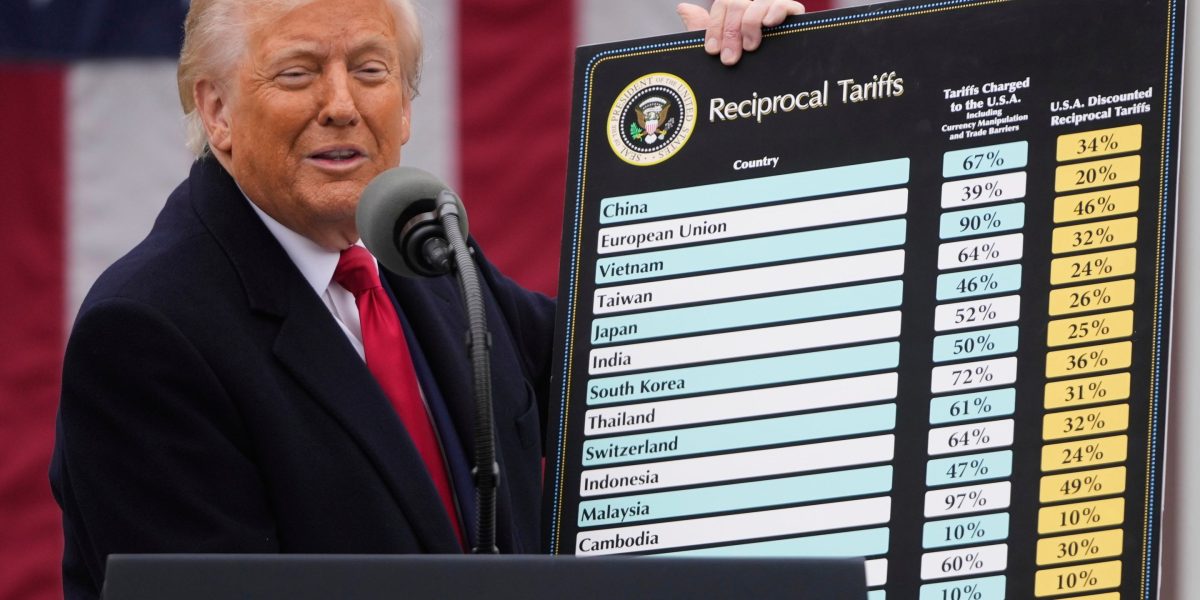
For Justin Baer, CEO of Shark Tank-backed Collars & Co., tariff volatility has made expansion focus tougher. “Just this morning, I heard our manufacturer is getting hit with a 50 percent tariff. It’s hard enough to run a business, make great products and create fantastic teams without throwing in one more thing that takes up bandwidth.”
The volatility has created two camps. Some companies have frozen expansion plans, waiting for clarity, says Buelow. “Others say, ‘You know what? The water’s not the right temperature, but we’re going to jump in the pool anyway. We don’t have a choice—our customers need this capacity deployed in the market.’”
Reshoring economics remain challenged. High-volume, low-margin products still struggle to make sense in the U.S., even with federal incentives. “Those have ended up being more nearshoring, and Mexico has been the biggest beneficiary,” says Gigerich. That could shift with the planned renegotiation of the U.S.-Mexico-Canada Agreement later this year. “If we go to bilateral trade agreements with Mexico and Canada separately, if we increase tariffs, that’s going to have a huge impact,” warns Cuneo.
Yet Covid’s lesson has stuck: Radical dependence on any single geography creates unacceptable risk. One of Gigerich’s clients, a major lock manufacturer, had almost all components for their biggest products coming from China. “During Covid, they had four months where they could get nothing from their supplier. That ground everything to a halt. They literally couldn’t make anything.”
Meanwhile, foreign direct investment has surged. “It’s been 15 years since we’ve been this busy on FDI coming to the U.S.,” Gigerich says. European companies are fleeing high energy costs. Canadian manufacturers are establishing their first U.S. facilities. America’s advantages—best consumer market, strongest financial system, most robust IP protections—are proving irresistible.
What this means: Build optionality into your supply chain. Single-country dependencies are strategic vulnerabilities. And if you’re considering Mexico for nearshoring, have a U.S. alternative ready in case USMCA terms shift.
4. AI Impact: The Great Unknown
Ask executives how AI will reshape their space needs, and the honest ones admit they don’t know yet. Some are hoping it will solve some of their talent and space needs. Max Friar, for example, realized in mid-2025 that his fast-growing company, Calder Capital, would soon outgrow its current 7,000-square-foot headquarters space. But none of the alternatives looked appealing. “We’ve turned more to how we can utilize existing space with home office setups, outsourcing and AI agent-led workflows. Our goal is to pair A+ players with AI workflows.” His company’s site selection process? “On indefinite hold as we explore a leaner workforce led by technological efficiencies.”
Indeed, for office space specifically, the calculus has shifted from “how many square feet per employee” to “do we even need a central location?” Remote work technologies and generative AI assistants are reducing the need for physical proximity.
For manufacturing, however, the impact remains murky. “We’re not seeing it yet that a 500-job project from 10 years ago is now a 300-job project,” observes Buelow. “It’s still early days.” That uncertainty has some waiting on their expansion efforts. “Because they don’t know yet if that’s going to be a 300-person center or a 400-person center.”
On the other hand, AI’s infrastructure demands are already reshaping regional economies. The data center explosion driven by AI compute needs has consumed available power, driven up construction labor costs and created entirely new location considerations.
What CEOs should do: Plan for flexibility. Design spaces that can contract if AI delivers massive productivity gains or expand if human collaboration remains essential. Avoid long-term commitments to fixed footprints.
5. Infrastructure Reality: The Hidden Timeline Killers
Power gets headlines, but infrastructure constraints and site scarcity are quietly extending project timelines and killing deals. “There are a lot of CEOs, COOs, CFOs out there who still think there are a ton of great greenfield sites available, but it’s just not the case,” says Gigerich. “Shovel-ready sites have been scooped up and developed, taking quality sites off the market.”
Rail-served sites are particularly scarce. “If you need rail, there are not a lot of great rail-served sites ready to go—not only with rail itself but also water, sewer, electricity, natural gas,” Gigerich says.
Water access has emerged as a sleeper issue, particularly in the Southwest. Data centers require massive water for cooling. Manufacturing facilities need reliable supply for production. And climate change is making historical water availability an unreliable predictor of future supply.
Transportation infrastructure varies wildly. Luca Cacioli chose Phoenix partly because of its highway system. “With our team spending time driving to clients, we needed a convenient freeway system. Phoenix has highways connecting directly to California and Mexico and the shortest average commute time of the top 25 U.S. cities.”
For PureWay’s Miglicco, infrastructure drove the entire strategy. “Speed, predictability and consistency are at the core of our model, so infrastructure plays a massive role.” His team paid close attention to access to major highways supporting efficient next-day and two-day routes, proximity to shipping and freight hubs, and how quickly they could move material in and out of facilities. “Every mile and every minute impacts our ability to service our customers,” he says. “So, infrastructure wasn’t just a box to check, it was a major part of what shaped our shortlist.”
Permitting timelines also can make or break speed to market. “Some states simply ‘get’ regulated industries and make it easier to operate compliantly and efficiently,” notes Miglicco.
Community opposition—the wild card—can derail even well-planned projects. “We’re seeing this in several states,” Cuneo says. “Local farmers didn’t like farmland going to a large facility and started protesting. Squeaky wheels get attention.”

His advice: Invest in community relations before you need them. “You cannot underestimate the importance of positive community relations. It has to be a win-win situation for long-term success.”
Infrastructure due diligence requires going far beyond spreadsheets. Visit sites, meet with utility providers, talk to local officials, interview other employers, understand political dynamics. Anything less risks expensive surprises.
The Decision Framework for 2026
Here’s what best-practice site selection looks like now:
1. Understand your true constraints. Can you operate without rail? Without three-phase power within 12 months? Those answers eliminate 90 percent of locations immediately.
2. Build optionality early. “We will pull together potential sites and try to find opportunities the market doesn’t know about,” Rareshide says. Don’t fall in love with a single location until contracts are signed and power commitments are locked in.
3. Don’t rush it. “The more time you have for this process, the better decision you’re gonna make,” Gigerich emphasizes. Talk to other employers in the market. Meet with union leaders. Visit community colleges. Interview utility executives. The Bureau of Labor Statistics can’t tell you what you’re actually going to pay or whether people will want to work for you.
4. Scenario-plan for multiple futures. If USMCA gets renegotiated unfavorably, do you have alternatives? If AI lets you run with 40 percent fewer workers, can your facility right-size? If power delivery gets delayed two years, can you stage your buildout? “Run scenario analysis and sensitivity analysis,” Buelow advises. “If different things happen in the future, how does that site and location perform?”
5. Recognize that incentives are nice but not decisive. “Programs that directly supported workforce training, operational expansion and long-term job creation had the most value for us,” Miglicco notes. “Incentives didn’t drive the decision—they simply helped us differentiate between otherwise similar locations.”
What Great CEOs Do Differently
Ask site selection experts what separates great CEO decision-makers from good ones, and a pattern emerges: trust, but verify. “The great ones are really astute assemblers of teams,” Deloitte’s Darin Buelow says. “They pick the right team and empower them to drive the project. They don’t have to be along for all the bloody details—they should be informed and ask penetrating questions.”
Active involvement at the right stages is key. “The CEO should be involved at least at the semi-finalist stage,” advises Dennis Cuneo of Fisher Phillips. “They should visit the site and see for themselves where it’s going to work.”
Justin Baer of Collars & Co. exemplifies this. When evaluating retail locations, he says, “I’ll go there and sit for a couple hours and watch the traffic come by and talk to all the neighbors. We also study all the data before we do it, look at our current customer base, see what the proximity is like.”
Luca Cacioli of CEIA USA tries to strike a similar balance. “I believe in empowering people who know how to do their homework,” he says. The company’s field applications engineer completed the first round of scouting. “Once that work was done, I visited multiple sites myself. That balance of trust and verification is critical.”
Perhaps most importantly, great CEOs look beyond obvious metrics. “A lot of executives get focused on one dimension—a lower tax rate or reducing logistics costs or an incentives package,” Buelow notes. “But a location decision has dozens and dozens of variables. Some create enterprise value and some inhibit it.”
Be clear about must-haves versus nice-to-haves. “Companies have to prioritize those factors against one another,” Buelow says. “How do we weight these?”
Finally, understand that stats only get you so far. “Data gets you a clear picture of costs, logistics, workforce and risk,” says PureWay’s Jeff Miglicco, “but intuition fills in the gaps, especially when multiple locations look good on paper. Your instincts tell you which place fits your culture, supports your growth strategy and will create the fewest surprises down the road.”