














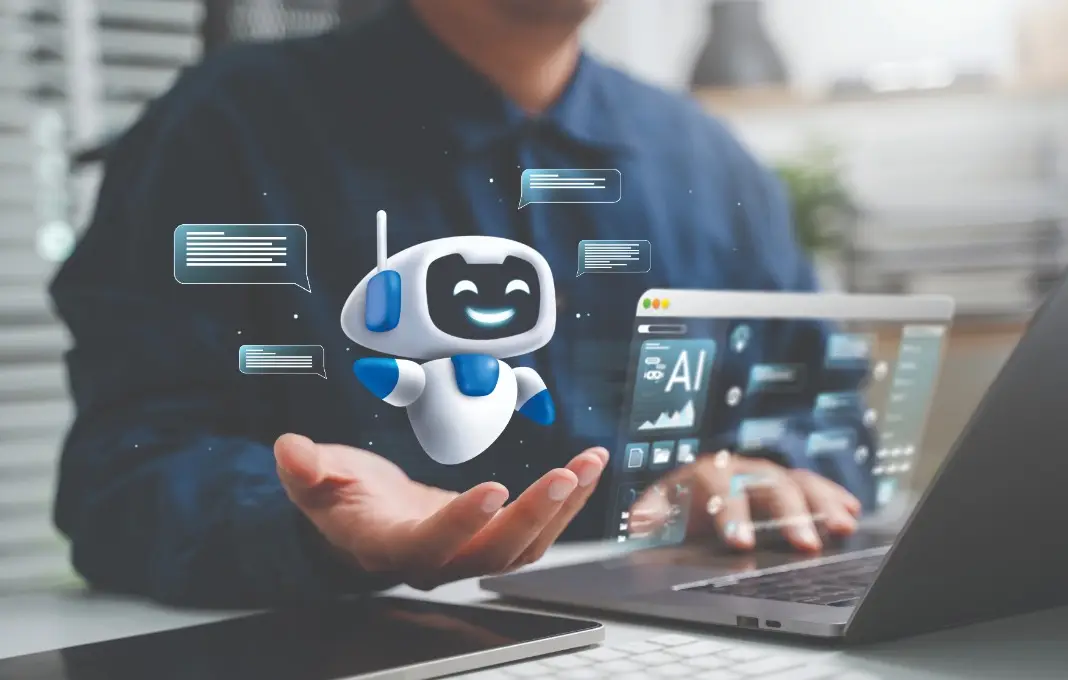



























AI agent adoption is expected to jump over 300 percent in the next two years. If you’re a CEO, this means you’ll no longer just be leading people—you’ll be overseeing a blended workforce of humans and AI agents with unparalleled power to tackle business objectives.
If you’re adding AI agents to your team, you’ve already thought about where they could be most efficient: repetitive tasks like scheduling, customer inquiries, transactions or data analysis. At Salesforce, we host a quarterly Agentforce Learning Day where employees learn to integrate AI tools into their daily work.
“This is about building capacity for humans,” said Jenny Simmons, VP of onboarding and employee learning at Salesforce. “It’s about the evolution of the job to a new place.”
Your New Teammates
That new place requires some new processes. Unlike onboarding humans, bringing an AI agent onto your team is more technical. You’ll need to configure it with the necessary data, workflows, permissions and contextual knowledge so it can perform its tasks effectively.
Define the work. Humans can understand nuance and ask clarifying questions, while an AI agent relies on clearly defined parameters. Early implementations relied on exhaustive prompt engineering, but modern agents need the ability to execute deterministic business logic when reliability matters most.
For creative customer interactions, you want your agent to adapt naturally. But when processing a refund or handling compliance workflows, you need the same sequence every time. With Agentforce’s Agent Script language, for example, you can define “if/then” logic directly—if a customer is platinum tier, route them here; if their order exceeds a threshold, trigger this approval. It’s a creativity toggle that ensures predictability where it’s mission-critical.
Omnichannel from day one. Your customers don’t live in just one channel, and neither should your agents. This is particularly critical for voice interactions—still 80 percent of customer service volume. Products like Agentforce Voice can handle real-time transcription, sub-second response times and smooth handoffs to human agents with full context. When integrated with Service Cloud, it captures complete transcripts so human agents never force customers to repeat themselves.
Keeping watch. AI agents don’t need motivation, but they do need monitoring of key metrics like error rates, escalation patterns, latency, cost per interaction and compliance adherence. As your agent workforce scales, you’ll need to incorporate dashboard tools like Agentforce Observability to insure things are going as planned.
Alongside Agents
Once your agents are up and running, getting the most out of your blended workforce will mean using the managerial skills your leaders already have and building some new ones. Some important areas for focus:
Communication and delegation. Just as humans benefit from regular check-ins, agents need oversight to make sure they’re working correctly, achieving goals and adhering to guidelines.
Technical fluency. Leaders don’t need to become data scientists, but you do need to understand when to apply deterministic logic versus creative AI, how to interpret observability data and how to shape the data environment that drives your digital workforce.
Workforce orchestration. Managing a blended team means choreographing seamless handoffs between agents and people. Your agents handle the volume and routine tasks, while humans tackle situations requiring judgment, empathy or expertise.
Empathy, ethics and judgment. AI’s potential is vast, and company policies won’t cover every scenario. Leaders need to think critically about where AI should and shouldn’t be deployed and how to maintain human oversight on sensitive decisions.
The Blended Workforce
In the age of AI agents, the old idea that leadership is purely about motivating people without understanding how the work gets done no longer holds. The key is to involve employees from the start, positioning AI as a tool to elevate human talent, not erase it, and to celebrate every success born from human ingenuity and amplified by AI. When employees see themselves as co-creators in this transformation, AI becomes an indispensable ally. For them, and for your business.