









































Classic rock is a kind of rock music that came out in – and was popular during – the late 1960s and throughout the 1970s, with some classic rock albums coming out in the 1980s, too. But if you’re talking about influential and overall important works of classic rock, most of them are going to come out a bit earlier, and so don’t be surprised when, below, you find albums released between 1966 and 1973.
Even if you’re quite strict with your definition, the period of classic rock is at least twice that length, but it’s easier to assess the earlier ones as influential on both later classic rock albums, and some other kind of rock music that came later, too. Also, to keep things a bit interesting, there’s a limit of one album per artist. Also, this really isn’t the same as going over the best classic rock albums, though some of the ones below can count themselves among the all-time best, too.
10
‘Who’s Next’ (1971)
The Who
Wedged between the arguably more groundbreaking Tommy and the arguably more compelling Quadrophenia is Who’s Next, which feels worth shouting out here as the punchiest and most approachable album by The Who. It’s an easy pick for their best, even with that aforementioned tough competition, but when an album begins with “Baba O’Riley” and ends with “Won’t Get Fooled Again,” it proves kind of hard to ignore.
Who’s Next still sounds great more than half a century later, and is a great starting point for The Who, generally speaking.
There’s some ambitious instrumentation found during some parts of this album, even if Who’s Next does ultimately remain recognizably “hard rock” in sound and spirit. It still sounds great more than half a century later, and is a great starting point for The Who, generally speaking. And, if all else fails, you’ve got that one-two-punch provided by those opening and closing tracks found here.
9
‘Sticky Fingers’ (1971)
The Rolling Stones
There was a certain British band that broke up in 1970, after having an amazing run of albums throughout the 1960s, and that may have made the future of rock look uncertain… until The Rolling Stones, also popular in the 1960s, got even better early in the 1970s. Sticky Fingers is far from the only album of theirs worth shouting out, but it might be their best overall.
As for its influence, it energized rock near the start of a new decade, and also sounded quite a bit rougher and rawer than many other (though not all other) rock albums from around the same time. If you want to understand the hype around The Rolling Stones, and only have an hour or less to get up to speed for whatever reason, then your best bet is listening to Sticky Fingers from front to back in one go.
8
‘Paranoid’ (1970)
Black Sabbath
Heavy metal is a kind of rock, so including something by Black Sabbath here doesn’t feel too out of step. Also, the heaviness found in an album like Paranoid isn’t quite as alarming or oppressive nowadays as it might’ve been 50+ years ago, so it all works a bit better when viewed as a rock album, as it isn’t as intense as what more recent “metal” might sound like.
Still, Black Sabbath were groundbreaking and undeniably influential for that type of rock going forward, and Paranoid is the best showcase of what made the band – at the peak of their powers – so special. The title track in particular is one of the best songs of its era, but most of the other songs here aren’t too far behind, and the album as a whole does also flow remarkably well throughout.
7
‘Blonde on Blonde’ (1966)
Bob Dylan
Bob Dylan’s seventh studio album, Blonde on Blonde, was the most ambitious he’d released up until that point in his music career, and even now, it remains one of the best and most ambitious he’s ever done, too. It’s a double album where no songs really feel like duds, and it does really feel worth having to get up several times throughout to flip/swap the vinyl records throughout (or just sitting with the one work for 73 minutes, if you’re not listening to it the old-fashioned way).
There are some other albums of Dylan’s that are worthy of being considered all-timers as far as folk rock’s concerned, but Blonde on Blonde is particularly grand in ambition and scale, so it’s going here. It’s also influential in terms of being an early double album for rock overall, so that’s another reason it’s particularly worth highlighting.
6
‘The Velvet Underground & Nico’ (1967)
The Velvet Underground & Nico
1967 was a big year for rock music, so much so that The Doors (by The Doors) and Sgt. Pepper’s Lonely Hearts Club Band are kind of relegated to honorable mention territory here. No, but seriously, the former was in this spot, until the person typing right now realized they’d forgotten about The Velvet Underground, a band that – alongside Nico – also broke ground rock-wise in 1967, with The Velvet Underground & Nico.
It’s famously one of those albums that can be found in the DNA of so much rock-related music that came in its wake, sort of doing for experimental rock what The Sex Pistols would later do for punk. And all that being said, The Velvet Underground & Nico still sounds unique, in many ways, to this day, meaning that even if it’s influential, it remains difficult – if not outright impossible – to totally replicate, or else craft something else that’s comparably alarming and game-changing.
5
‘Are You Experienced’ (1967)
The Jimi Hendrix Experience
Okay, it’s technically one place ahead of The Velvet Underground & Nico, but the debut album of The Jimi Hendrix Experience, Are You Experienced, isn’t necessarily more influential, because it’s hard to say. The former probably influenced a wider range of rock sub-genres, but Are You Experienced helped codify the psychedelic rock sound, all the while also dipping its toes into some other kinds of rock, even if it’s most influential as far as psychedelic rock is concerned.
Jimi Hendrix might well have even been behind better albums than this (namely, Electric Ladyland), but Are You Experienced remains the most important as far as influence is concerned. It’s all very raw, surreal, and atmospheric, and an unsurprisingly great showcase for what made Hendrix special, as a guitarist and frontman.

4
‘The Rise and Fall of Ziggy Stardust and the Spiders from Mars’ (1972)
David Bowie
The first untouchably great David Bowie album was probably Hunky Dory, though he had released some all-time great songs before that point (namely, “Space Oddity”). But it was The Rise and Fall of Ziggy Stardust and the Spiders from Mars that felt a bit more like a full-on rock album, and it was an overall even better one than the already excellent Hunky Dory… though some classic rock purists might scoff at it being here, since it’s probably more glam rock than anything else, if you want to get specific about sub-genres.
But The Rise and Fall of Ziggy Stardust and the Spiders from Mars is also as good as glam rock gets, and there’s enough edge – and occasional intensity – here to make it worthy of getting mentioned alongside other classic rock albums. It’s probably the definitive glam rock album, as well as one of the more cinematic and atmospherically engrossing albums of its era, so it well and truly stands as an essential and influential one in just about every way.
3
‘The Dark Side of the Moon’ (1973)
Pink Floyd
You could possibly argue that some Pink Floyd albums are underrated or overlooked, but not in the case of The Dark Side of the Moon. This one didn’t invent progressive rock, but it did so much to progress (ha) that kind of rock sound, all the while also being kind of psychedelic, but in a more refined sort of way, and in service of an album that, overall, explores so many broad anxieties about life in the 20th century.
It’s an anxious and quite somber album, at times, but then there are parts of The Dark Side of the Moon that did indeed rock, including “Money,” which is bitter lyrically but rousing and exciting musically. It’s a bit more mellow than many of the previously mentioned classic rock albums, but you can’t look past it for what it did for rock at the time, as well as for how mature and forward-thinking it ultimately was.
2
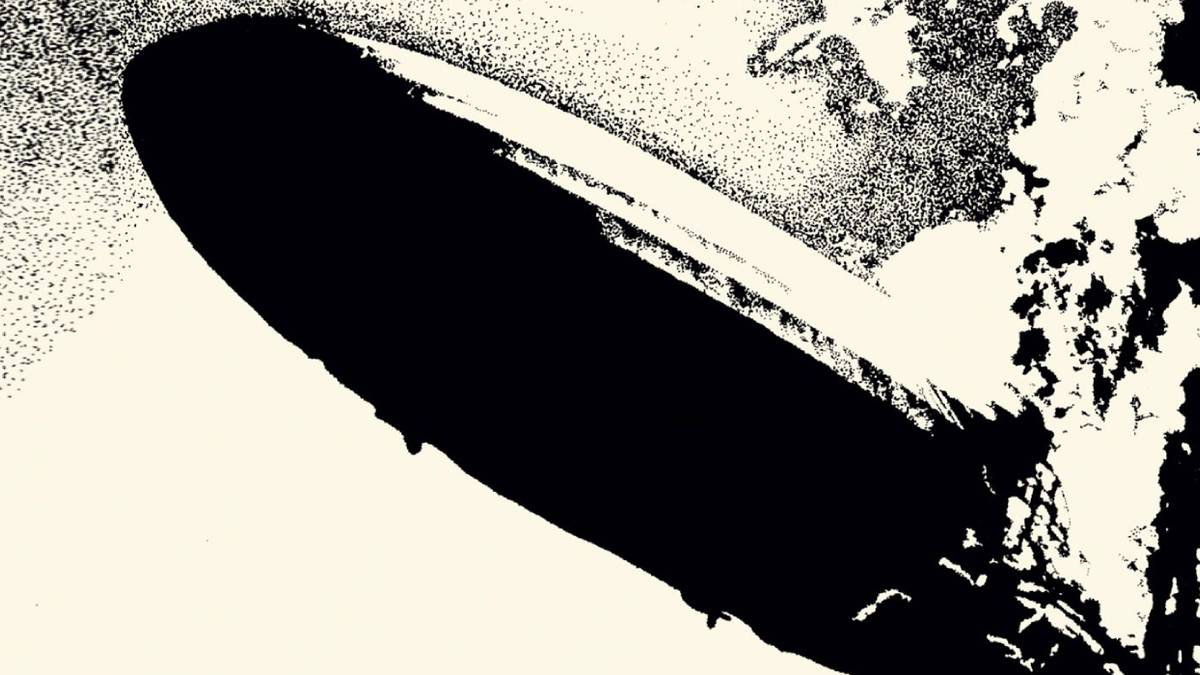
‘Led Zeppelin I’ (1969)
Led Zeppelin
There’s some stuff that can be said about Led Zeppelin and the way they borrowed quite heavily from blues rock, which predated classic rock, technically, but the band did make that sort of rock bigger and louder, meaning they helped make the blues classic. Wait, not literally. Blues rock can still be classic in the sense of holding up and sounding good, but that classic rock sound was really cemented by Led Zeppelin taking and reworking blues rock, you know?
It was all made harder, and bam, you’ve got hard rock, too. Any of the first six Led Zeppelin albums could go here, but their first self-titled one is particularly punchy and consistent, and since it came first – and really codified the sort of sound the band would return to and continue to refine in many of their songs to follow – that’s the one that’s going here.
1
‘The Beatles’ (1968)
The Beatles
It’s a testament to how good The Beatles were that it’s hard to single out one album of the band’s as their undeniable best, but as for most influential? Actually, that’s also hard to do, but maybe a tad easier, with their self-titled double album sometimes known as The White Album being the one. It could be cheating to pick it, since it’s an everything sort of album – like, one of the most eclectic in rock history – but still, that’s the best argument to be made for picking it.
There are songs here of all different kinds, including some very experimental stuff (like “Revolution 9”) and one that was an early hard rock (maybe even heavy metal) track, “Helter Skelter.” As for all the other songs, pretty much all have a different sound or sub-genre they fit into, so the album, overall, feels like it condenses all the rock music that came before, and all the classic rock that would follow, just being overwhelming in both size and ambition.