






































The last monkey on the loose among several that escaped after a Mississippi highway crash has been found and captured, authorities said Thursday.
A resident who lives near the crash site called authorities to report the animal’s location and it was then “successfully recovered,” the Mississippi Department of Wildlife, Fisheries, and Parks said in a statement to The Associated Press.
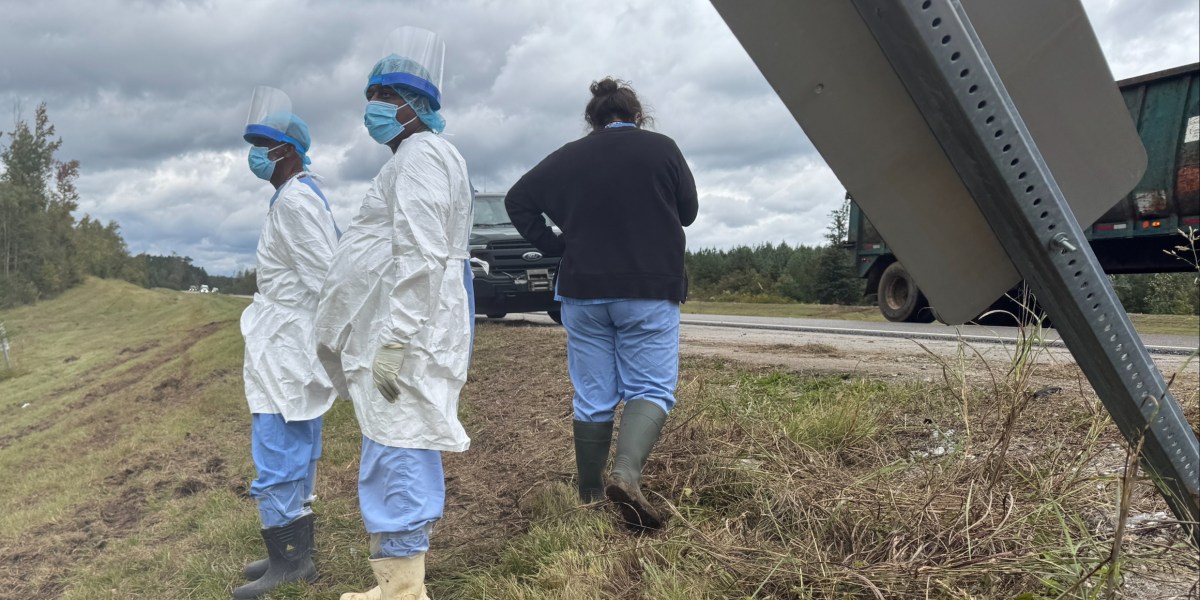
It was the last monkey on the loose from the Oct. 28 crash when the truckoverturned on Interstate 59. Five monkeys were killed as law officers hunted for them in the immediate aftermath of the crash. Video from officers’ body-worn cameras showeda chaotic sceneas monkeys that escaped from their wooden crates dashed around the grassy interstate median, with some running toward cars and semis on the interstate.
Two other monkeys that eluded officers at the crash site were later shot and killed by civilians, who said they were protecting their families and neighborhoods. Officials had warned residents not to approach theRhesus monkeys,saying they are known to be aggressive.
The last monkey on the loose was found Wednesday afternoon near a home in the Vossburg area, just east of where the truck had wrecked. Brandy Smith saw the monkey when her dog started barking,she told WDAM-TV. Her neighbors called 911. Workers from one of the companies that had been transporting the truckload of monkeys across the country arrived to tranquilize the monkey, Smith said.
The monkeys had been housed at the Tulane University National Biomedical Research Center in Louisiana, which routinely provides primates toscientific research organizations, according to the university. Tulane has said it wasn’t transporting the monkeys and they do not belong to the university.
PreLabs, which describes itself on its website as a biomedical research support organization, said in a statement that the animals were being lawfully transported to a licensed research facility. It said the monkeys weren’t carrying any known diseases. Thirteen of the monkeys that were not killed arrived at their original destination last week, according to Tulane.
The escape is the latest glimpse into thesecretive industry of animal researchand how contracts demanding confidentiality prevent the public from knowing key facts about studies involving animals.